Synaptigen Review: Why This Brain Supplement’s Marketing Deserves a Second Look
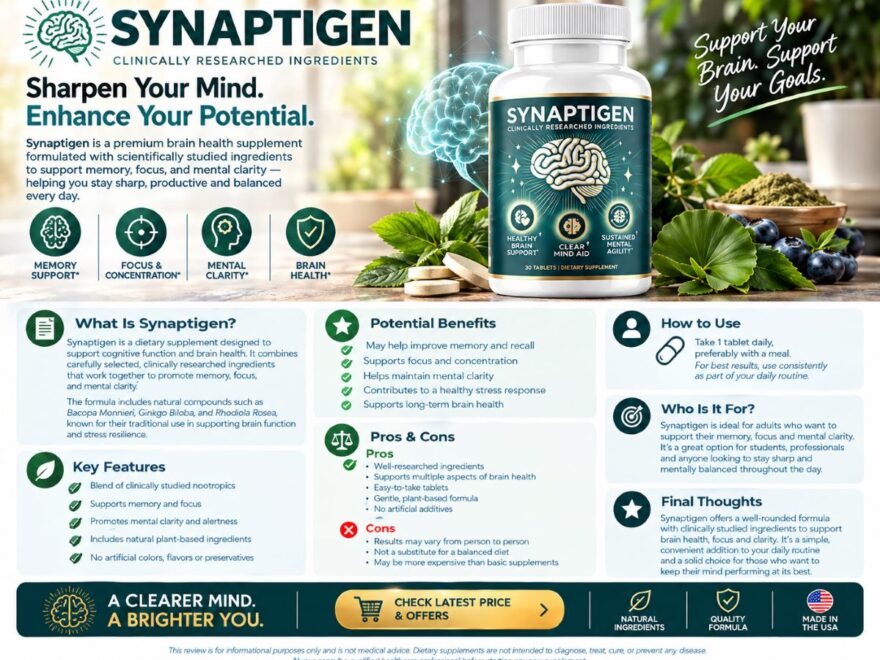
Brain health supplements are one of the fastest-growing categories in wellness marketing, and Synaptigen has become one of the more visible names in that space. Rather than repeating the memory-and-focus pitch you’ve likely seen across dozens of near-identical pages, this Synaptigen review focuses on where that content actually comes from and what claims genuinely hold up, because the publishing pattern here tells a more useful story than the marketing copy does.
One detail is worth noting right away: several Synaptigen pages open by preemptively stating that “Synaptigen is not a scam.” That kind of unprompted denial is a phrase worth paying attention to on its own — legitimate products rarely need to open a review by reassuring you they’re real, and it’s a pattern that shows up often in aggressively marketed supplement campaigns.
Where Synaptigen Marketing Shows Up That It Shouldn’t
One of the clearer red flags found while researching this Synaptigen review is that some promotional content is published through Pressbooks, an academic publishing platform operated by the City University of New York for course materials and scholarly work. A brain supplement review has no legitimate reason to appear there, and it’s highly unlikely the university authorized or reviewed this content. This pattern — publishing affiliate marketing through open academic or institutional platforms — has shown up repeatedly across other heavily promoted supplements, and it’s a stronger signal about the marketing network than anything written in the review itself.
Separately, at least two “press release” style articles promoting Synaptigen were distributed through a newswire service under different titles, each formatted to look like independent journalism. Newswire services typically don’t fact-check the health claims in what they distribute, so seeing a review formatted like breaking news is a marketing tactic, not confirmation of anything.
The Review Numbers That Don’t Quite Match Up
Synaptigen’s review counts vary in a telling way across sources: one site cites “12,000+ reviews” at 4.9 stars, another cites the oddly specific “12,643 reviews” at 4.98 stars, and a third simply states 4.8 stars with no count at all. None of these figures link to an independent, checkable review platform. Numbers that are close but never identical across supposedly separate reviewers often indicate the same marketing source being lightly reworded across multiple sites, rather than genuinely independent data collection.
- Be skeptical of any review that opens by insisting the product “is not a scam” before you’ve even asked
- Compare review counts across sources — numbers that are similar but inconsistently rounded suggest a shared marketing origin, not independent verification
- Notice when a supplement is published on a platform with no logical connection to health or wellness content
- Watch for a review that ends abruptly or contains a cut-off word, a common sign of automated or low-effort content generation
The Scientific Claim Worth Questioning Most
Synaptigen’s central mechanism claim — that it works by “clearing sugar buildup around brain cells” to improve communication between neurons — doesn’t correspond to an established, named process in mainstream neuroscience. Real cognitive decline research discusses mechanisms like neuroinflammation, oxidative stress, and reduced blood flow, each with a body of published literature behind it. A vague, sugar-buildup explanation that isn’t tied to any specific study is worth treating as a simplified marketing narrative rather than a scientifically established mechanism.
That doesn’t mean every ingredient in the formula is meaningless. Probiotics, prebiotics, and various plant extracts do have general research connecting gut health to cognitive function, an area sometimes called the gut-brain axis. The distinction that matters is between plausible ingredient categories and a specific, unverified mechanism used to explain why the finished Synaptigen formula, at its actual doses, would produce the results claimed.
How to Evaluate Synaptigen and Similar Brain Supplements
If you’re still curious about trying it, a few habits will help you separate genuine information from repackaged marketing before you buy.
- Search the exact phrase from a review’s opening lines to see how many other sites use nearly identical wording
- Ask whether the “sugar buildup” mechanism or any other central claim is tied to a specific, citable study rather than a general explanation
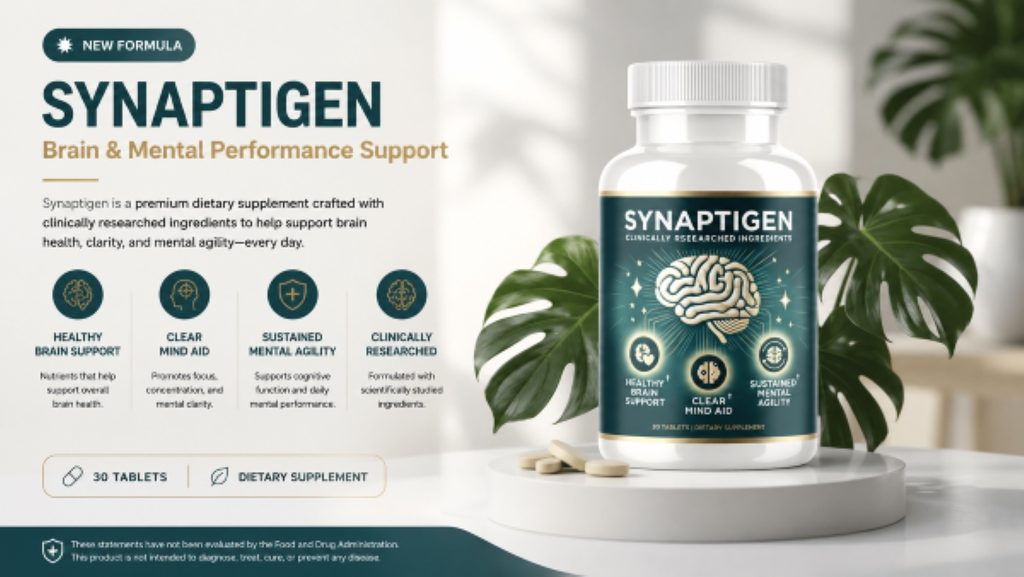
- Check whether the product format (capsule vs. melt-in-mouth tablet) is described consistently across every source you check
- Track your own memory and focus for a few weeks using simple notes before and after starting, rather than relying on marketing testimonials
If memory lapses or brain fog are significant or getting worse, that’s worth bringing to a doctor rather than addressing through a supplement alone, since those symptoms can have underlying causes — from sleep issues to thyroid function to more serious conditions — that deserve proper evaluation.
This article is for informational purposes only and is not medical advice. Consult a healthcare provider if you’re experiencing significant memory changes or cognitive symptoms before relying on a supplement.
Frequently Asked Questions About Synaptigen
Is Synaptigen backed by real clinical research? Some ingredient categories, like probiotics linked to gut-brain health, have general research behind them, but the specific “sugar buildup” mechanism cited in Synaptigen marketing isn’t an established scientific concept.
Why does Synaptigen marketing appear on academic websites? Some promotional content was found published through an open academic publishing platform, suggesting an unauthorized use of institutional infrastructure rather than a genuine, independent review.
Are the Synaptigen review counts accurate? Review counts vary slightly but suspiciously across sources and aren’t linked to any independently verifiable platform, so they should be treated with caution.
Should I see a doctor before trying Synaptigen? If you’re experiencing significant or worsening memory issues, yes — those symptoms deserve proper medical evaluation rather than relying solely on a supplement.
Have you come across a Synaptigen review that opened by insisting it “isn’t a scam,” or noticed similar review-count inconsistencies with other brain supplements? Share what you found in the comments — and let me know if you’d like a future post on which brain-health ingredients actually have solid research behind them.