

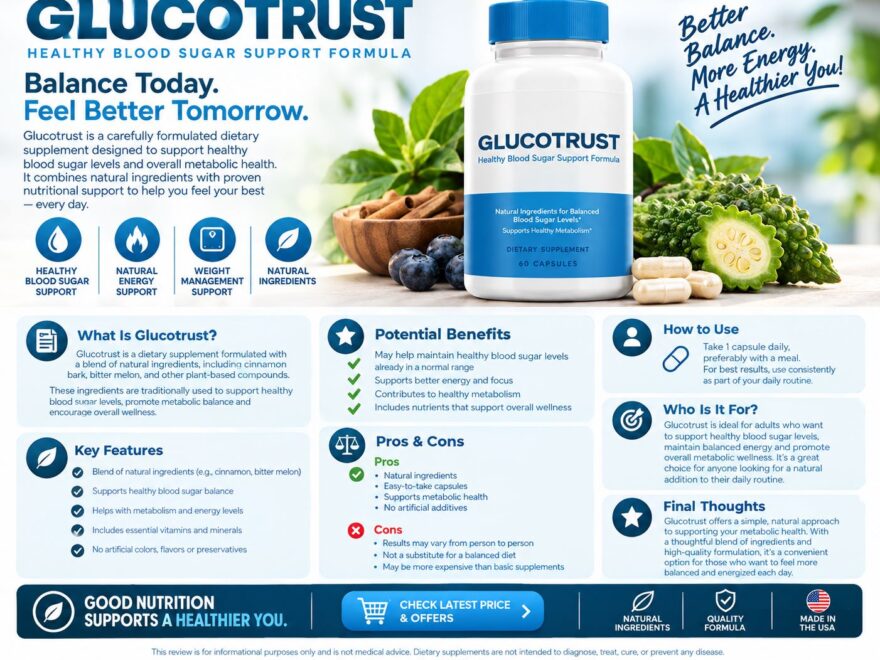
GlucoTrust Review: What the Dosage Numbers Actually Show
Blood sugar supplements are everywhere right now, and few names come up as often as GlucoTrust. This GlucoTrust review isn’t going to repeat the “reduces cravings, improves sleep, balances blood sugar naturally” pitch you’ve probably already read a dozen times. Instead, it focuses on the one thing most marketing pages skip entirely: whether the actual ingredient doses in each capsule are high enough to do what the research on those ingredients suggests.
GlucoTrust has been around for several years, created by James Walker and sold as a natural blend targeting blood sugar support, sugar cravings, and sleep quality through ingredients like chromium, cinnamon bark, and Gymnema Sylvestre. It’s a more established product than a lot of the blood sugar supplements flooding search results lately, which makes it worth a more careful, dose-by-dose look rather than a quick yes-or-no verdict.
What GlucoTrust Actually Contains, Dose by Dose
The most useful thing a GlucoTrust review can do is separate the ingredient names from the ingredient amounts, because those two things tell very different stories. GlucoTrust lists familiar, well-researched compounds, but an independent ingredient analysis found that the herbal blend totals just 82.5 milligrams across roughly eleven active ingredients — an average of about 7.5 milligrams per ingredient once you divide it out.
- Cinnamon bark extract — studied for supporting insulin sensitivity, but typically at doses in the hundreds of milligrams, well above what a 7.5 mg average share would provide
- Chromium — one of the more established minerals for blood sugar support, though its effective dose in most studies is still meaningfully higher than what a proprietary blend split this many ways would allow
- Vitamin C — listed at 52.5 mg in GlucoTrust; a 2017 meta-analysis found vitamin C modestly helpful for blood sugar, but the average study dose was around 1,000 mg, roughly nineteen times higher
- Gymnema Sylvestre and bitter melon — both have individual research behind blood sugar and craving support, but again share the same limited portion of the blend total
None of this means the ingredients are fake or useless — it means the amounts in a single daily capsule are likely too small to replicate the results seen in the clinical research those ingredients are often cited alongside. That gap between “contains a studied ingredient” and “contains enough of it to matter” is the single most important thing to understand before buying GlucoTrust or any similarly structured blend.
Why the “GLP-1 Alternative” Marketing Deserves Skepticism
Some of GlucoTrust’s more recent marketing positions it as a natural alternative to prescription GLP-1 medications like Ozempic or Mounjaro. That comparison is worth pushing back on directly. GLP-1 medications work through a specific, well-documented hormonal mechanism that’s been tested in large clinical trials and requires a prescription because of how powerfully it affects the body. A supplement built around milligram-level herbal doses is not operating through the same mechanism or anywhere near the same strength, and marketing that implies otherwise is borrowing credibility it hasn’t earned.
If you’re specifically looking for something comparable to a GLP-1 medication’s effect on blood sugar or weight, that’s a conversation to have with a doctor about actual prescription options, not something an over-the-counter supplement like GlucoTrust is positioned to deliver, regardless of how the marketing frames it.
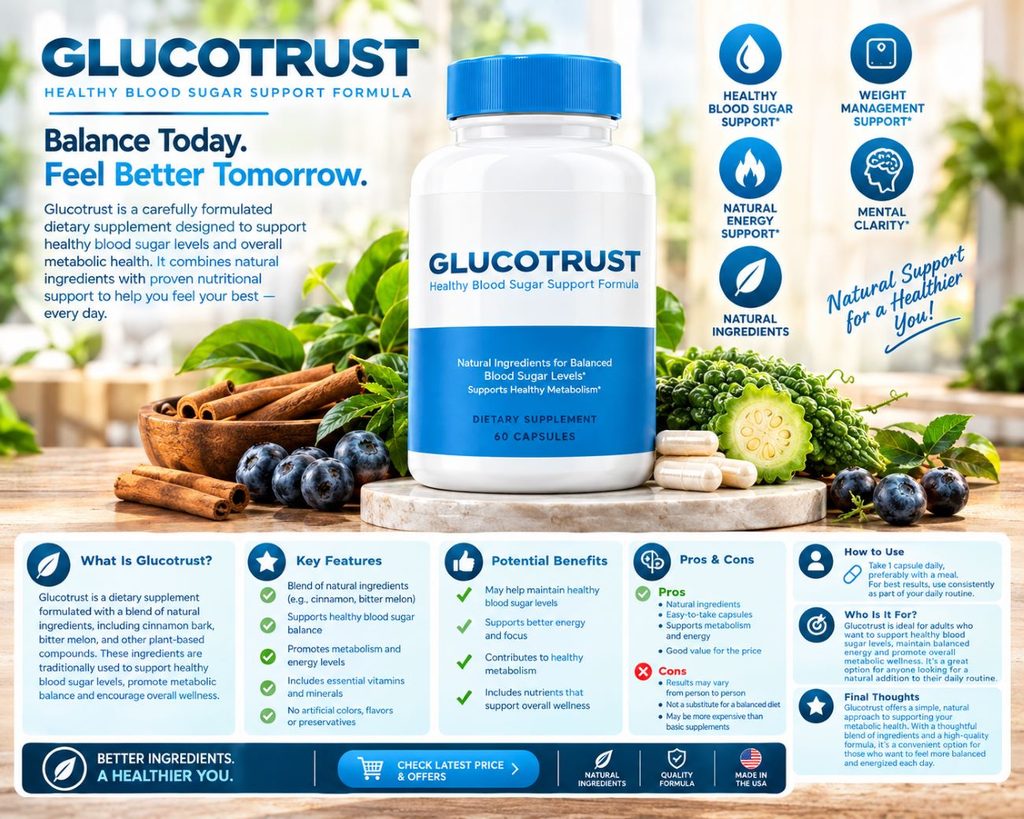
What Real Customer Feedback Actually Looks Like
Genuinely mixed feedback is a useful signal here. Some GlucoTrust users report noticeable improvements in cravings, energy, and blood sugar stability, while others report little to no change or mild side effects like an upset stomach. That kind of split outcome lines up with what you’d expect from a low-dose herbal blend: it may offer a mild, gradual nudge for some people, particularly around sleep and cravings, without the dramatic blood-sugar shift the marketing implies.
A practical way to judge it for yourself: track your fasting blood sugar readings (if you already monitor them), sleep quality, and craving frequency for two to three weeks before starting, then compare against the following month. That gives you an honest read on GlucoTrust’s actual effect on you personally, rather than relying on the mixed anecdotes scattered across marketing pages and forums.
Who Should Be Cautious With GlucoTrust
Because GlucoTrust contains ingredients like chromium and cinnamon that can influence blood sugar, it may interact with diabetes medications, potentially increasing the risk of blood sugar dropping too low. Anyone currently on insulin or other glucose-lowering medication should talk to their doctor before adding GlucoTrust, rather than combining them without medical guidance.
This article is for informational purposes only and is not medical advice. Consult a healthcare provider before starting GlucoTrust or any blood sugar supplement, especially if you take diabetes medication.
Frequently Asked Questions About GlucoTrust
Are the ingredient doses in GlucoTrust strong enough to work? Independent analysis suggests the herbal blend doses are considerably lower than the amounts used in the clinical research behind those same ingredients, which may limit how effective GlucoTrust is compared to what the marketing implies.
Is GlucoTrust really a natural alternative to Ozempic or Mounjaro? No. GLP-1 medications work through a different, more powerful mechanism tested in large clinical trials, and comparing an herbal supplement to them is a marketing claim, not a clinical equivalence.
Can GlucoTrust interact with diabetes medication? Yes, potentially. Because several ingredients can affect blood sugar, anyone on diabetes medication should consult a doctor before starting GlucoTrust.
How long does it take to notice results from GlucoTrust? User experiences vary widely, with some reporting gradual improvement over several weeks and others seeing little change, which may relate to the relatively low doses of most active ingredients.
Have you tried GlucoTrust and compared how it affected your cravings, sleep, or blood sugar readings? Share your experience in the comments — and let me know if you’d like a future post comparing GlucoTrust’s ingredient doses against other popular blood sugar supplements side by side.