

Moringa Review: What the Research Actually Says About This “Miracle Tree”
Few plants have earned as many nicknames as moringa — “miracle tree,” “tree of life,” and “superfood of the future” all show up in the same breath when people describe it. This moringa review sets aside the hype-driven labels and focuses on what current research actually supports, what’s still unproven, and how to add it to your routine in a way that’s genuinely useful rather than just trendy.
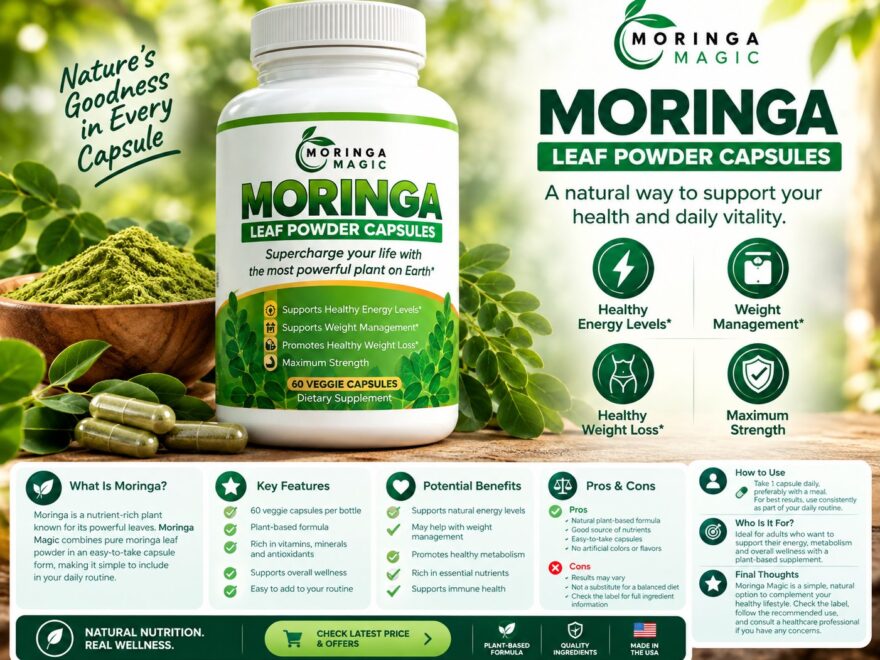
Moringa oleifera is a fast-growing tropical tree native to parts of Asia and Africa, and nearly every part of it — leaves, pods, seeds, and even the oil — has some traditional or nutritional use. The leaves are by far the most studied and most commonly available form, sold as fresh greens, dried powder, capsules, or tea. That variety of formats is part of why moringa reviews online can feel so inconsistent, since a powder and a capsule don’t always deliver the same nutrient dose.
What Moringa Actually Delivers Nutritionally
Where moringa clearly earns its reputation is basic nutrient density. According to USDA data, 100 grams of moringa leaf powder provides a meaningful amount of protein, along with notable levels of vitamin C, calcium, and iron relative to its calorie count. This is exactly why moringa has been used for decades in regions facing malnutrition — it’s a genuinely efficient way to add protein and micronutrients to a limited diet, not just a trendy smoothie add-in.
For someone already eating a varied, nutrient-rich diet, the practical benefit is smaller but still real. A daily spoonful of moringa powder is a reasonable way to round out gaps in vitamin C, iron, or plant protein, particularly for people following a mostly plant-based diet where iron and B-vitamin intake need more attention.
The Research-Backed Benefits Worth Taking Seriously
Beyond basic nutrition, several areas of moringa research are genuinely promising, even if the evidence is still developing. This is where a fair moringa review needs to separate small, early human studies from the more dramatic claims often attached to moringa supplements sold online.
- Antioxidant activity — moringa leaves contain compounds like quercetin and chlorogenic acid, both studied for reducing oxidative stress linked to aging and chronic disease
- Blood sugar support — several small human studies suggest moringa may modestly improve insulin sensitivity and reduce glucose absorption after meals
- Anti-inflammatory effects — research has found moringa may help reduce markers of low-grade inflammation, a factor connected to conditions like arthritis and inflammatory bowel disease
- Cholesterol support — early evidence points to modest improvements in cholesterol markers, though larger trials are still needed to confirm the effect size
The honest caveat across nearly all of this research: many of the strongest results come from animal studies or small human trials, not large, long-term clinical research. That doesn’t mean the benefits aren’t real — it means “moringa may support blood sugar” is a more accurate way to describe the evidence than “moringa controls blood sugar,” which is the kind of overstatement that shows up often in supplement marketing.
Who Should Be Cautious Before Adding Moringa
Moringa isn’t automatically safe for everyone, and this is the part most casual “superfood” articles skip entirely. Moringa root and bark, in particular, have been linked to uterine contractions and should be avoided during pregnancy — a caution that doesn’t apply the same way to leaf-based products, but is worth knowing if you’re buying a less common part of the plant.
Because moringa may affect blood sugar and blood pressure, anyone taking diabetes medication, blood pressure medication, or blood thinners should talk to a doctor before adding a daily moringa supplement, since the combined effect could push levels lower than intended. People with thyroid, liver, or kidney conditions should also check with their doctor first, given moringa’s potential interaction with how the body processes certain compounds.
How to Actually Use Moringa in Daily Life
If you decide to try it, moringa powder mixed into a smoothie, yogurt, or a glass of water is the simplest way to start, typically beginning with a small amount like half a teaspoon to see how your digestion responds before increasing toward a full teaspoon or two daily. Moringa has a distinct, slightly bitter, earthy taste, so pairing it with fruit or a mild-flavored base makes it easier to stick with consistently.
Whole-food forms of moringa, like the dried leaf powder, are generally a better starting point than high-dose capsules marketed with dramatic health claims, since you can control the amount more precisely and avoid the inflated dosing sometimes used in commercial supplement blends.
This article is for informational purposes only and is not medical advice. Consult a healthcare provider before adding moringa to your routine, especially if you’re pregnant, take medication for blood sugar, blood pressure, or blood clotting, or manage a thyroid, liver, or kidney condition.
Frequently Asked Questions About Moringa
Is moringa safe to take every day? For most healthy adults, moderate daily use of moringa leaf powder appears safe, though anyone on medication or managing a chronic condition should check with a doctor first.
Can moringa really lower blood sugar? Small human studies suggest a modest effect on blood sugar and insulin sensitivity, but the evidence is still limited, and moringa shouldn’t replace prescribed diabetes treatment.
What’s the best form of moringa to buy? Dried leaf powder is generally the most versatile and well-studied form, making it easier to control your dose compared to high-strength capsules.
Is moringa safe during pregnancy? Moringa root and bark have been linked to uterine contractions and should be avoided during pregnancy; check with a doctor before using any moringa product while pregnant.
Have you tried adding moringa to your diet, and did you notice any difference in energy or digestion? Share your experience in the comments — and let me know if you’d like a future post comparing moringa powder brands or exploring recipes that make the taste easier to enjoy.