

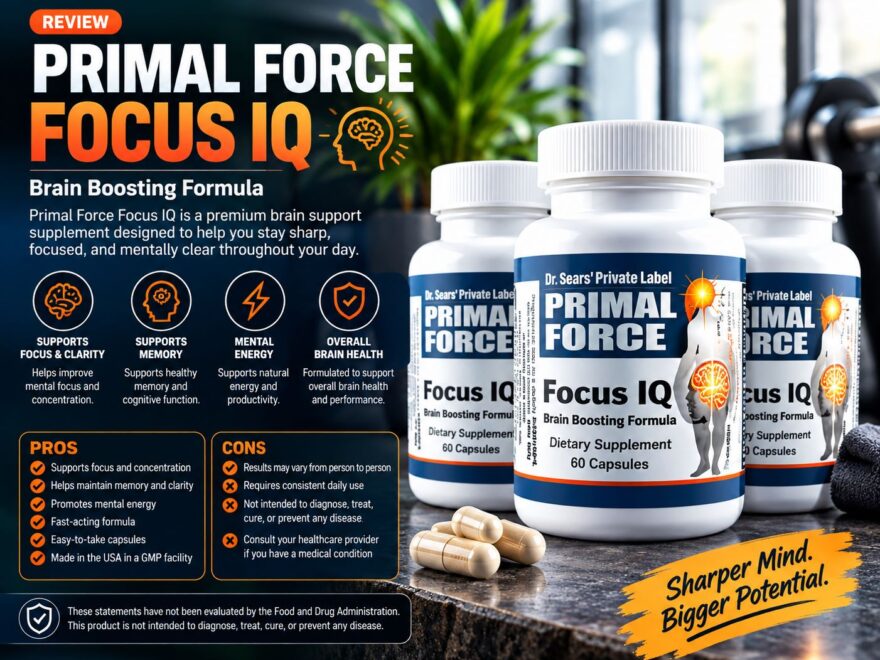
Focus IQ Review: Why Nobody Can Agree on What’s Actually In It
Before buying a brain supplement like Focus IQ, most people check a few reviews to see what’s inside. With this particular product, that step runs into a problem fast: ask five different sources what Focus IQ actually contains, and you’ll get five different answers. This Focus IQ review focuses on that inconsistency specifically, because it’s the single most important thing to understand before trusting any claim made about this product.
Focus IQ is sold under the Primal Force brand, associated with Dr. Al Sears, a physician known in the natural health and anti-aging supplement space. That association lends the product a layer of credibility that a lot of generic brain supplements don’t have. But a recognizable name on the label doesn’t resolve the much more basic question of what’s actually in the capsule — and on that question, the sources reviewed for this article genuinely contradict each other.
Five Different Ingredient Lists for One Product
Researching this Focus IQ review turned up ingredient lists that don’t overlap nearly as much as you’d expect for a single, consistent formula. One retail listing describes the active ingredients as omega-3, acetyl-L-carnitine, caffeine, and ginkgo biloba. A separate review site lists an entirely different eight-ingredient formula: bacopa monnieri, ginkgo biloba, lion’s mane mushroom, phosphatidylserine, L-theanine, a vitamin B complex, rhodiola rosea, and Alpha GPC — sharing only ginkgo with the first list. A third source describes centella asiatica and, remarkably, lists “dopamine” itself as an ingredient, which doesn’t hold up biologically, since dopamine taken orally doesn’t cross into the brain the way a supplement claim like this implies. A fourth, older source tied to the brand’s own marketing describes yet another formula built around bacopa, baicalin, EPA and DHA, and an African plant called kanna.
When five supposedly reliable sources can’t agree on the basic ingredient list of one product, that’s not a minor inconsistency — it’s a sign that the available information about Focus IQ isn’t trustworthy enough to base a purchase decision on, regardless of which specific claims sound most appealing.
A Contradiction Hiding in Plain Sight
One retail listing for Focus IQ describes it as “Caffeine-Free, All Natural” directly in its feature list, while listing caffeine itself among the active ingredients in the very same listing. That’s not a subtle inconsistency between two different websites — it’s a direct contradiction within a single product page, and it’s exactly the kind of detail worth checking carefully before trusting any other claim on that listing.
- Compare ingredient lists across at least three independent sources before trusting any single one
- Watch for biologically implausible claims, like a supplement listing a neurotransmitter such as dopamine as something you can simply ingest and absorb intact
- Read a product’s own feature summary against its ingredient list for direct contradictions, like a “caffeine-free” claim next to a caffeine ingredient
- Be skeptical of marketing content that uses dense, vague phrasing (“neuro-adaptive support,” “cholinergic pathway reinforcement”) without naming specific ingredients at all
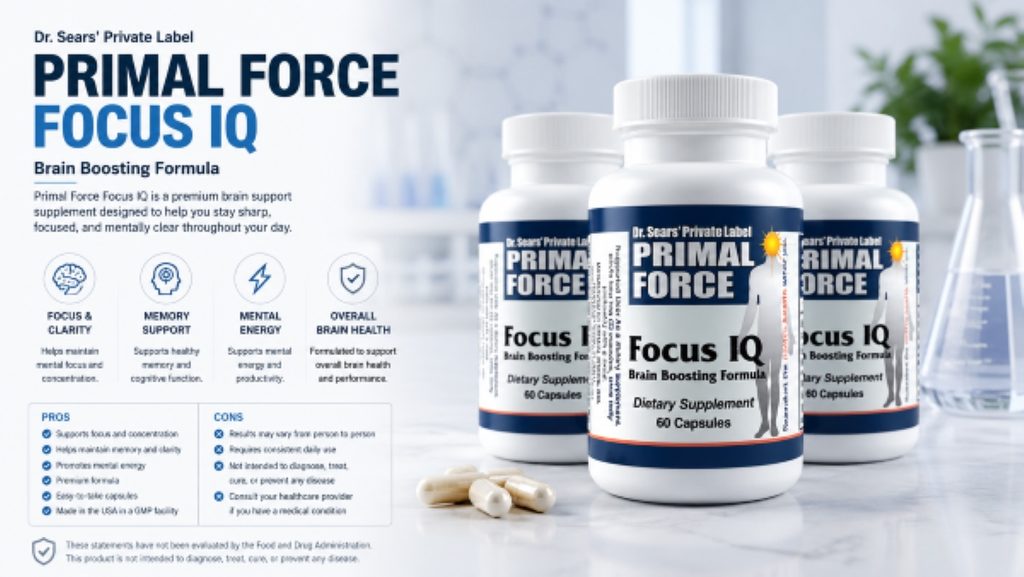
Why Borrowed Credibility Isn’t the Same as Verified Ingredients
It’s worth separating two different things here: whether Dr. Al Sears is a real, identifiable person with a background in natural health, and whether any specific review accurately describes what’s inside a Focus IQ capsule today. The first doesn’t guarantee the second. A recognizable name attached to a brand gets reused, referenced, and sometimes exaggerated across a wide network of affiliate content, much of which may never have been reviewed or approved by the person it names.
This is a pattern worth watching for beyond Focus IQ specifically: a known expert’s name attached to a supplement doesn’t verify any individual review’s ingredient claims, pricing, or specific health promises. Always check the actual current product label from the official source directly, rather than relying on third-party summaries that may be outdated, recycled, or simply incorrect.
How to Actually Verify What You’d Be Taking
If you’re still interested in Focus IQ after seeing how inconsistent the available information is, the only reliable path is checking the current, official supplement facts panel directly from the manufacturer’s own product page or the physical bottle, rather than any third-party review, including this one.
- Request or screenshot the exact Supplement Facts panel before ordering, and save it for comparison if the formula changes later
- Cross-check any specific ingredient claim against basic physiology — a claim that doesn’t make biological sense, like orally absorbed dopamine, is a reason for skepticism regardless of the source
- If you take other medications, bring the verified ingredient list to a pharmacist or doctor to check for interactions, since several ingredients mentioned across these sources, like rhodiola and ginkgo, can interact with blood thinners or antidepressants
- Be cautious of “exclusive VIP auto-delivery” subscription offers bundled with brain supplements, and read the cancellation terms before entering payment information
This article is for informational purposes only and is not medical advice. Consult a healthcare provider before starting any brain or cognitive supplement, especially if you take medication, including blood thinners or antidepressants.
Frequently Asked Questions About Focus IQ
What does Focus IQ actually contain? Sources reviewed for this article list significantly different ingredients, so the only reliable way to know is checking the current official Supplement Facts panel directly from the manufacturer.
Does Focus IQ contain caffeine? Sources disagree, and at least one listing contradicts itself by calling the product “caffeine-free” while also listing caffeine as an active ingredient.
Can a supplement really contain dopamine as an ingredient? Orally ingested dopamine doesn’t effectively cross into the brain, so a supplement claiming to deliver dopamine directly should be treated with significant skepticism.
Does Dr. Al Sears’ involvement make Focus IQ more trustworthy? A recognizable name adds credibility to the brand, but it doesn’t verify any individual review’s specific ingredient or dosage claims, which should still be checked independently.
Have you come across conflicting ingredient lists while researching a Focus IQ review, or noticed a similar contradiction on another supplement’s own product page? Share what you found in the comments — and let me know if you’d like a future post on how to verify a supplement’s actual Supplement Facts panel before buying.