Citrus Burn Review: The Marketing Tricks Worth Spotting Before You Buy
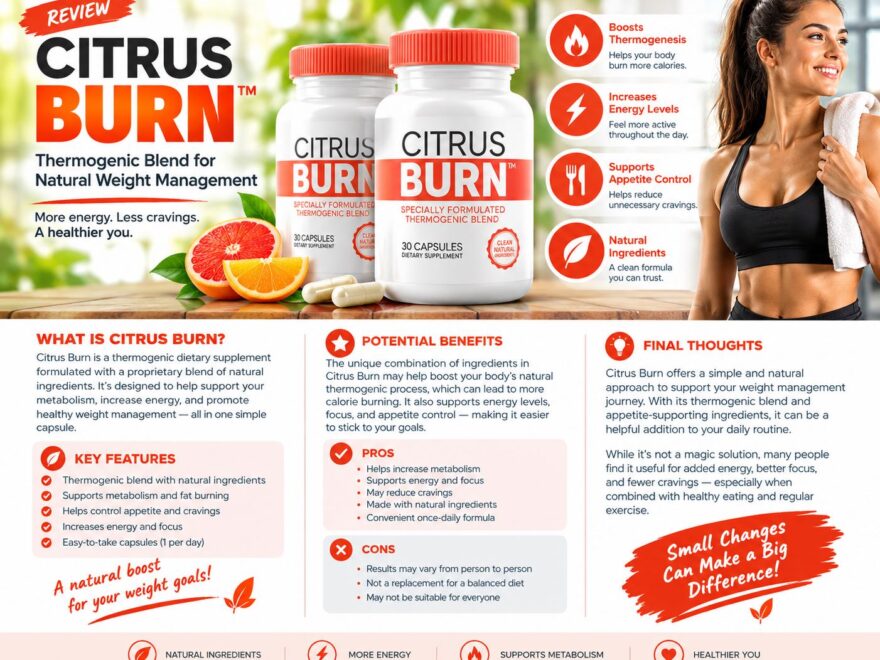
Fat-burning supplements are one of the most crowded categories online, and Citrus Burn has become one of the more visible names competing for attention in it. Rather than repeating the “melt stubborn fat” pitch found across dozens of near-identical pages, this Citrus Burn review focuses on a handful of specific, verifiable red flags, because they tell you more about whether to trust this product than another round of testimonials ever could.
Citrus bioflavonoids and compounds like synephrine, found in bitter orange, genuinely have research behind modest thermogenic effects — that’s real, published science, not an invented concept. The issue isn’t the underlying ingredient category. It’s how aggressively and, in places, deceptively this specific product has been marketed, which is worth understanding before you trust any individual Citrus Burn review you come across.
Why a State Government Website Is Hosting a Citrus Burn Review
The clearest red flag uncovered while researching this Citrus Burn review is where one of its promotional documents is actually hosted: the official website of the Alabama State Fire Marshal’s office, a government agency with no connection whatsoever to weight-loss supplements. This kind of placement doesn’t happen by accident. It typically means an open file-upload form on a government or institutional site was exploited to publish affiliate marketing content, something the agency itself almost certainly never reviewed or approved.
This exact pattern — publishing supplement marketing through unrelated institutional websites — has shown up repeatedly across other heavily promoted products researched in this space. When a product review turns up somewhere with no logical reason to host it, that placement is a stronger signal than anything written in the review itself.
Twin Domains and a Fabricated Review Count
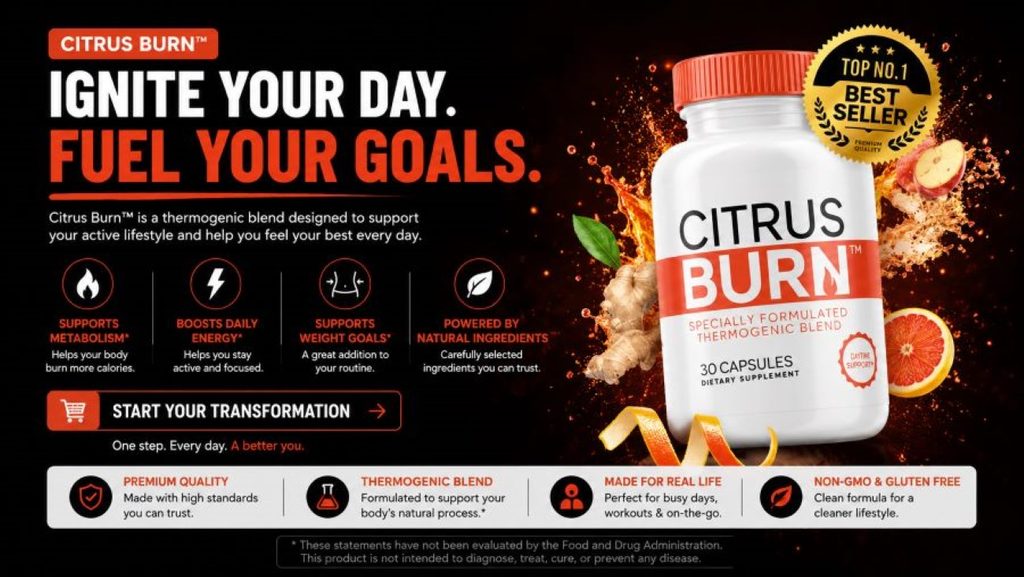
Citrus Burn is marketed through at least two different domains presenting themselves as the official site, with one using a subtly rearranged spelling of the product name. This kind of near-identical domain pairing is a common tactic in affiliate marketing, designed to capture traffic and sales regardless of which “official” link a shopper happens to click.
One of these sites embeds technical review-rating data claiming over 24,000 reviews at a 4.7-star average, yet the same page only displays four actual written reviews. A real aggregate rating should be backed by a visible, checkable volume of reviews, not a number buried in the page’s code that doesn’t match what’s actually shown to a visitor. That mismatch is worth testing on any supplement site: if a big review count is claimed, count how many individual reviews you can actually read.
- Check whether a product is sold through more than one domain with slightly different spellings of the same name
- Compare a site’s claimed review count against the number of individual reviews actually visible on the page
- Be skeptical of testimonials featuring specific, dramatic weight-loss numbers (like a precise 22-pound loss) attributed to first-name-only customers with no way to verify them
- Notice when a review is hosted on a site with no logical connection to health or supplements, such as a government agency
What the Real Research Actually Supports
It’s worth being fair to the underlying science here, since not everything about Citrus Burn’s ingredient category is marketing spin. Citrus aurantium, the source of synephrine used in many thermogenic formulas, has legitimate published research examining its role as a stimulant alternative following the ephedra ban, with some studies showing modest thermogenic effects. That’s a real, citable finding — but it describes the ingredient category broadly, not a clinical trial of the finished Citrus Burn product itself at its specific doses.
Other ingredients mentioned across different Citrus Burn listings, including green tea extract, naringenin, and hesperidin, have similarly modest, generally cell-study or animal-study-level evidence for weight-related effects, with much more limited human clinical data. That gap between “the ingredient category has been studied” and “this specific product has been proven to work” is the most important distinction to carry into any purchase decision.
How to Evaluate Citrus Burn and Similar Supplements Yourself
None of this means Citrus Burn is necessarily harmful — but the scattered, sometimes fabricated marketing around it means a careful buyer should look past any individual review, including this one, before deciding whether to purchase.
- Buy only from a single, verifiable manufacturer site, never from a random PDF or government-hosted link found through search
- Treat large review counts as unverified unless you can actually see and read that many individual reviews
- Remember that synephrine-containing products can raise heart rate and blood pressure, so anyone with a cardiovascular condition or on related medication should check with a doctor first
- Set realistic expectations: modest thermogenic ingredients support, at best, a small addition to results already coming from diet and exercise, not a standalone transformation
This article is for informational purposes only and is not medical advice. Consult a healthcare provider before starting any thermogenic weight-loss supplement, especially if you have a heart condition, high blood pressure, or take related medication.
Frequently Asked Questions About Citrus Burn
Is Citrus Burn backed by real clinical research? The broader ingredient category, including citrus aurantium and synephrine, has published research behind modest effects, but no verified clinical trial of the finished Citrus Burn product itself was found.
Why is a Citrus Burn review hosted on a government website? Some promotional content was found published through an apparently exploited upload system on an unrelated state agency site, a sign of an aggressive affiliate marketing network rather than an authorized partnership.
Are the thousands of Citrus Burn reviews real? At least one site’s claimed review count doesn’t match the small number of actual reviews visible on the same page, which is a reason to treat the figure with real skepticism.
Is Citrus Burn safe for people with heart conditions? Not necessarily. Synephrine-containing supplements can raise heart rate and blood pressure, so anyone with a cardiovascular condition should consult a doctor before trying it.
Have you come across a Citrus Burn review published somewhere unexpected, or noticed a review count that didn’t match what was actually shown on the page? Share what you found in the comments — and let me know if you’d like a future post comparing the real research behind citrus-based thermogenic ingredients.