

Vertigenics Review: Why Dizziness Needs a Diagnosis Before a Supplement
When the room spins, you want an answer fast, and Vertigenics promises one: a natural formula that targets the “root causes” of vertigo and supports balance, focus, and brain health. This Vertigenics review looks at what the bottle and the marketing say, which ingredients have real research, and why dizziness is a symptom that deserves a proper diagnosis before any capsule enters the picture.
Vertigo is frightening, disruptive, and surprisingly varied. It can come from the inner ear, from migraines, from blood pressure changes, from medication side effects, and, rarely, from something serious. That variety is exactly why a one-size-fits-all supplement is a risky promise. Below you will find the claims, the contradictions between sources, and a safer plan for anyone living with dizzy spells.
What Vertigenics Claims to Be
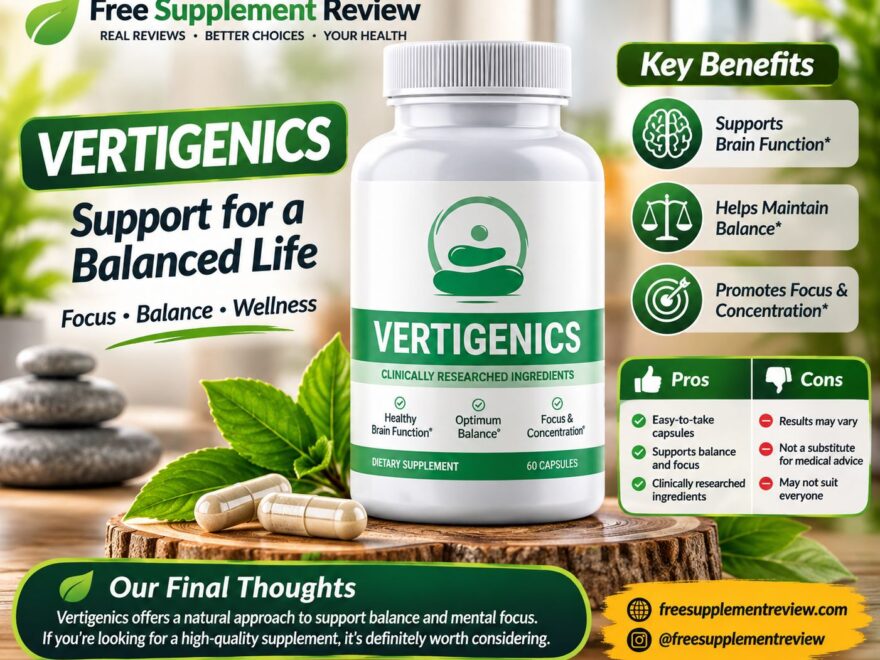
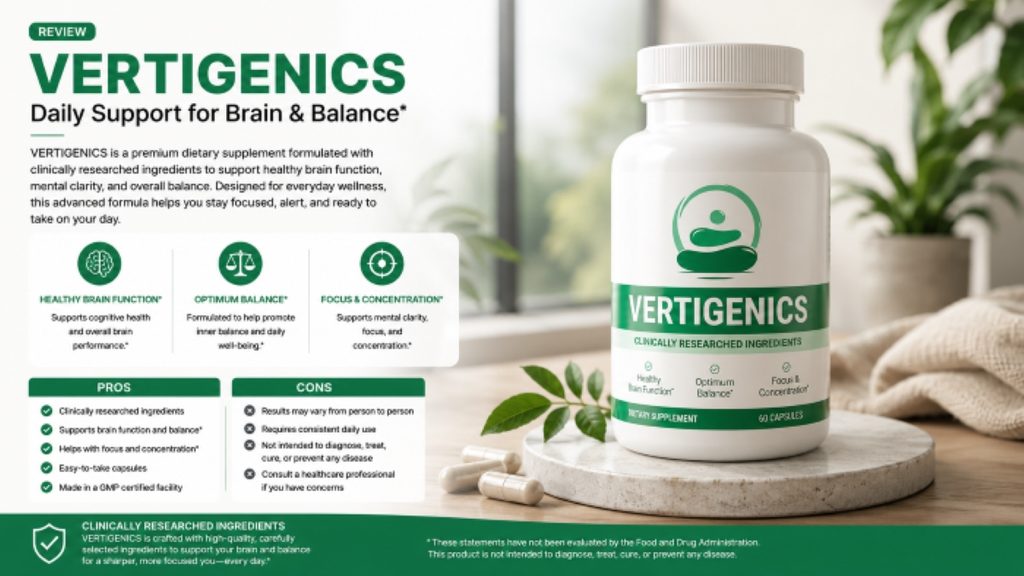
The bottle shows 60 capsules of dietary supplement, with the phrase “clinically researched ingredients” and three claims: healthy brain function, optimum balance, and focus and concentration. Online pages go further, describing a non-sedating formula that supports the inner ear, circulation, and nerve signaling, and that works on “the root causes” of dizziness. Notice the gap: “clinically researched” describes ingredients, and nothing proves that the finished capsule was tested on people with vertigo.
- Format: 60 capsules, usually one to two per day according to promotional pages
- Main claims: balance support, less dizziness, clearer focus, and brain health
- Wording to question: “root causes” and “clinically researched” without a named study
- Missing from the image: a legible Supplement Facts panel with amounts per capsule
Vertigenics Spellings and Ingredient Lists That Don’t Match
Even the name wobbles. Pages write Vertigenics, Vertigenic, and Vertegenics, sometimes in the same article. The ingredient lists wobble too: ginger root appears on several pages, bacopa and huperzine A on others, ginkgo biloba, magnesium, niacin, and L-theanine on still others. One page says it supports “acetylcholine levels,” another says it manages anxiety triggers. A real label lists one set of ingredients with amounts, so treat every list that is not on the bottle as a guess.
Credibility devices pile up. A neurologist named Elena Vargas is quoted praising the “neurovascular model of vertigo,” a self-described “Health Science Audit Group” claims a “2026 lab audit,” and a first-person reviewer says he researched supplements for three months. None of these can be verified. One page even lists “citations” that point to the home pages of journals, not to a specific study, which is a way of looking scientific without being checkable.
Where the Vertigenics Reviews Are Published
The publishing pattern is a stronger warning than any claim. Vertigenics reviews appear on newswire services, in a “sponsored health” section of a large news site, on dozens of free Google Sites pages, and in a forum thread posted inside a reef aquarium forum. PDF versions were uploaded to the event files of a science organization and to a university center’s website through a form. Sponsored and newswire content is paid distribution, not independent testing.
The text itself often reads like fragments stitched together, with phrases such as “deep-rooted care to the vestibular system, sensory organs, and the brain stem.” Real medical writing explains which condition it addresses, in which patients, and with what outcome. These pages do not. If a review cannot say how many people were studied or how long they were followed, you are reading advertising, and the most useful response is to keep your wallet closed.
What the Vertigenics Ingredients Can Realistically Do
Some of the commonly named ingredients have research, but none replaces a diagnosis or proven treatment. Evidence is strongest for easing nausea and weakest for treating the cause of vertigo itself. Because amounts are hidden, you also cannot tell whether a capsule contains a dose comparable to studies.
- Ginger: helps with nausea and motion sickness in several studies, but does not fix the cause of vertigo
- Ginkgo biloba: mixed results for dizziness in older adults, and it may add to the effect of blood thinners
- Huperzine A: a real cholinesterase inhibitor that can interact with dementia drugs and may slow the heartbeat
- Bacopa: small studies on memory over many weeks, with stomach upset in some users
- Magnesium: useful for migraine prevention in some people, which matters if migraines trigger dizziness
- L-theanine and niacin: calming focus and flushing respectively, not vertigo treatments
Why a Diagnosis Comes First
The most common cause of spinning vertigo is benign paroxysmal positional vertigo, in which tiny crystals shift in the inner ear. It is treated with repositioning maneuvers performed by a clinician, and it often improves in minutes, which no capsule can match. Other causes include vestibular neuritis, Meniere’s disease, vestibular migraine, low blood pressure, anemia, anxiety, and medication effects. A short exam can usually tell these apart.
Some symptoms are emergencies. Call for urgent help if dizziness comes with sudden severe headache, double vision, trouble speaking, weakness or numbness, difficulty walking, fainting, or chest pain. New hearing loss with vertigo also needs prompt care. Treat a supplement as an add-on at most, never as a substitute for an evaluation, particularly if the episodes are new, frequent, or getting worse.
A Careful Way to Try Vertigenics
If your doctor has identified the cause and agrees that a supplement is reasonable, keep the experiment small and measurable. A single bottle is enough, and a symptom diary tells you far more than a testimonial. Tell your clinician and pharmacist about everything you take, especially blood thinners, heart drugs, antidepressants, and dementia medication.
- Ask for the full Supplement Facts panel and the manufacturer’s physical address before ordering
- Screenshot the checkout page, guarantee terms, and any subscription enrollment
- Log each dizzy episode with date, trigger, duration, and severity for four to six weeks
- Stay hydrated, sleep regularly, and avoid sudden position changes while you test
- Stop and seek care for new symptoms, palpitations, or worsening spells
This article is for informational purposes only and is not medical advice. Consult a healthcare provider about dizziness or vertigo before relying on a supplement, and seek emergency care for sudden severe symptoms.
Frequently Asked Questions About Vertigenics
Can Vertigenics cure vertigo? No supplement can claim that, and I found no clinical trial of the finished formula, so any benefit is unproven.
What is in Vertigenics? Pages list different mixes of ginger, bacopa, huperzine A, ginkgo, magnesium, niacin, and L-theanine, so verify the amounts on the official label.
Is Vertigenics safe with medication? Not necessarily. Ginkgo and huperzine A can interact with blood thinners, heart, and dementia drugs, so ask a pharmacist first.
Why do the Vertigenics reviews look so different? Many are sponsored, newswire, or recycled pages with unverifiable quotes, so look for independent sources.
Have you tried Vertigenics or another balance supplement, and did a doctor identify the cause of your dizziness first? Share your experience in the comments, and tell me if you would like a future post on the questions to ask your doctor about vertigo and dizzy spells.