

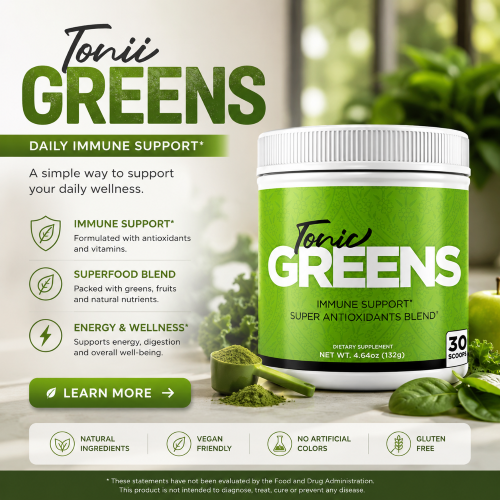
Tonic Greens Review: What’s Really in This “57-Ingredient” Formula
Search for a Tonic Greens review and you’ll find dozens of near-identical articles praising its “57 nutrient-rich ingredients” and sweeping claims about immunity, digestion, and energy all in one scoop. This Tonic Greens review takes a more grounded look at what’s actually inside the powder, what greens blends can realistically do, and where the marketing outruns the evidence.
Greens powders have become one of the most popular supplement categories, largely because they promise a shortcut to better nutrition in a single daily scoop. That convenience is appealing, but it’s also exactly why it’s worth understanding what a product like Tonic Greens can and can’t substitute for before making it part of your routine.
What Tonic Greens Claims to Do
Tonic Greens is a powdered dietary supplement built around a large blend of fruits, vegetables, herbs, medicinal mushrooms, probiotics, and prebiotics, marketed as a “6-in-1” formula for immune support, digestion, cardiovascular health, energy, and cognitive clarity. Different promotional pages describe the ingredient count as “57,” and some versions of the marketing even tie it to specific conditions like shingles or overactive bladder, claims that go considerably further than a general wellness powder can be expected to support.
Looking at the Ingredients Behind Tonic Greens
Across the various listings, ingredients most consistently mentioned in Tonic Greens include quercetin, curcumin, resveratrol, green tea extract, elderberry, and spirulina, layered on top of a broader blend of greens and mushrooms:
- Quercetin — A flavonoid with genuine anti-inflammatory and antioxidant research, commonly found in onions, kale, and citrus.
- Curcumin — Well-studied for anti-inflammatory effects, though poor natural bioavailability means absorption varies significantly depending on formulation.
- Elderberry — Has reasonable evidence for modestly shortening cold and flu duration, one of the stronger immune-related ingredients in the formula.
- Spirulina — A nutrient-dense algae with antioxidant properties, though evidence for dramatic immune effects in humans remains limited.
Because Tonic Greens uses a proprietary blend spread across dozens of ingredients, individual doses aren’t disclosed, which means it’s impossible to know whether any single component is present in an amount close to what research studies actually used. A formula listing 57 ingredients sounds comprehensive, but a long list without disclosed amounts often means many ingredients are present in trace, marketing-friendly quantities rather than clinically meaningful ones.
Marketing Red Flags Worth Noticing Before You Buy Tonic Greens
Much of the online visibility for Tonic Greens comes from paid press releases distributed through newswire services, with strikingly similar phrasing repeated across dozens of “reviews.” Some versions link the product to specific medical conditions like shingles or overactive bladder — claims that a general wellness powder has no verified basis for making, and that a legitimate dietary supplement should never be marketed to treat. No published clinical trial has tested the complete Tonic Greens formula, so claims about its combined effect rest on marketing language rather than confirmed data.
What Greens Powders Can Realistically Add to Your Diet
Whether or not you try Tonic Greens, it helps to have realistic expectations for what any greens powder can offer:
- A supplement, not a substitute. No powder replicates the fiber, volume, and full nutrient profile of actually eating vegetables and fruit.
- A convenience boost on busy days. Useful for filling small nutritional gaps, not for correcting a genuinely poor diet long term.
- Modest antioxidant support. Ingredients like quercetin and curcumin have real research behind them individually, even if the blended formula hasn’t been tested as a whole.
- Digestive variability. Probiotic and fiber-rich blends can cause bloating for some people initially, so starting with a partial scoop is a reasonable approach.
Pricing, Guarantees, and Who Should Be Cautious
Tonic Greens is typically sold in multi-bottle bundles directly from the official website, often with a money-back guarantee window. Before ordering, check the exact refund terms and whether the purchase includes a recurring subscription. Anyone with autoimmune conditions should be cautious with immune-stimulating ingredients like elderberry and echinacea-type herbs, and people on blood thinners should check with a doctor given curcumin’s potential interaction with anticoagulant medication before adding Tonic Greens to their routine.
How Tonic Greens Compares to Other Greens Powders
Tonic Greens sits in an increasingly crowded market of greens powders, many built around a similar strategy of combining dozens of ingredients into one proprietary blend. What actually separates a more trustworthy product from an interchangeable one usually isn’t the ingredient count — it’s whether the label discloses individual dosages, whether third-party lab testing is mentioned and verifiable, and whether the marketing sticks to general wellness claims instead of implying it can address specific diagnosed conditions. A 57-ingredient list sounds impressive, but a shorter formula with disclosed amounts and independent testing can often be the more trustworthy choice.
If you’re comparing Tonic Greens against a competing greens powder, it’s worth paying attention to how each brand talks about its own limits. A company willing to say plainly that its product supports general wellness rather than treating a specific condition is generally more credible than one leaning on urgency-driven claims about shingles, bladder issues, or other named ailments — claims that a dietary supplement has no legitimate basis for making in the first place.
Frequently Asked Questions About Tonic Greens
Does Tonic Greens treat shingles or bladder issues?
No. Despite some marketing suggesting otherwise, Tonic Greens is a general wellness supplement, not a treatment for any diagnosed medical condition.
Is Tonic Greens backed by clinical trials?
Individual ingredients like elderberry and curcumin have separate research, but no published trial has tested the complete 57-ingredient formula itself.
Can Tonic Greens replace eating vegetables?
No. It can supplement a diet, but it doesn’t replicate the fiber and full nutrient profile of whole fruits and vegetables.
Final Thoughts on This Tonic Greens Review
The ingredients in Tonic Greens include some genuinely researched compounds, but the proprietary blend format makes it impossible to verify actual dosages, and some marketing claims — particularly around specific medical conditions — go well beyond what any greens powder can support. Treat it as a convenience add-on to an already reasonable diet, not a substitute for one.
Have you tried Tonic Greens? What did you actually notice, and did the taste and mixability match what the marketing promised? Share your experience in the comments below.