

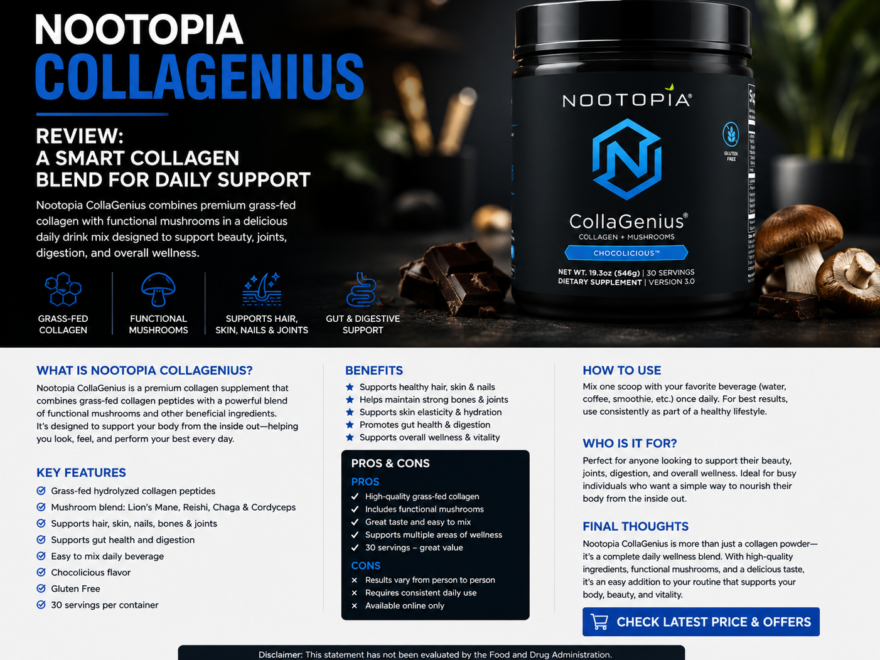
CollaGenius Review: Two Very Different Products Share This Name
Before getting into ingredients or results, there’s something every CollaGenius review should mention upfront but most don’t: there are two unrelated products using nearly identical names. One is a collagen-and-mushroom powder made by the established supplement company BiOptimizers, sold through Nootopia and available on Amazon. The other is a separate nootropic capsule sold through a standalone site, using aggressive urgency marketing and testimonials that read more like copywriting than genuine reviews. This CollaGenius review covers both, because confusing them could mean buying the wrong product entirely.
The BiOptimizers CollaGenius: Collagen Meets Adaptogenic Mushrooms
The more established version of CollaGenius is a powdered supplement combining bovine and marine collagen with four adaptogenic mushrooms — lion’s mane, chaga, cordyceps, and reishi — along with cacao and other flavoring ingredients, sold in a “chocolicious” formula. It’s marketed for brain health, immune support, and healthier hair, skin, and nails, positioning itself at the intersection of two popular supplement trends: collagen for skin and joints, and functional mushrooms for cognition.
Independent reviews of this version note that lion’s mane has some of the more promising research among the mushroom ingredients, particularly around boosting brain-derived neurotrophic factor, though most of that research remains limited to animal studies rather than large human trials. Chaga and reishi carry longstanding traditional use and reasonable antioxidant research, but neither has strong direct evidence for the specific cognitive claims made about CollaGenius. As for the collagen component, research consistently shows that consuming collagen through food doesn’t produce the same measurable effects seen in some collagen supplement studies, which makes the connection between dietary collagen and this product’s benefits somewhat harder to pin down than the marketing implies.
The Second CollaGenius: A Different Formula, A Different Set of Concerns
Separately, a nootropic product also branded CollaGenius is sold through its own dedicated website with a noticeably different ingredient list: lion’s mane, chaga, cordyceps, and reishi mushrooms again appear, but this version adds cacao for mood, monk fruit as a sweetener, and MCT oil for energy, with no collagen mentioned at all despite the name. The marketing here leans heavily on urgency tactics — “today only” pricing and countdown-style offers — alongside testimonials describing dramatic improvements in “alpha and gamma brainwave activity,” a level of specific neurological detail that would typically require EEG equipment to actually measure, not something a person could assess from how focused they feel.
This pattern — a lesser-known product adopting a name nearly identical to an established one, then leaning on urgency and unverifiable technical-sounding testimonials — is worth treating with real caution. It doesn’t necessarily mean the second CollaGenius is fraudulent, but the combination of vague sourcing, aggressive sales tactics, and suspiciously specific pseudo-scientific claims is a recognizable pattern across many supplement scams, and it’s exactly the kind of detail a rushed, five-minute purchase decision tends to miss.
What to Check Before Buying Either Version
Given the naming overlap, a few practical steps matter more here than usual:
- Confirm the manufacturer. Check whether the listing is genuinely from BiOptimizers/Nootopia or from an unrelated seller using a similar name.
- Compare the actual ingredient list. The presence or absence of collagen is the clearest way to tell the two apart.
- Be skeptical of countdown timers and “today only” pricing. These are sales tactics common across low-transparency supplement sites, not typically used by established, reputable brands.
- Look for reviews outside the seller’s own site. Independent, dated reviews on Amazon or third-party supplement sites carry more weight than testimonials embedded directly in a sales page.
What Actually Supports Skin, Joints, and Cognitive Function
Regardless of which CollaGenius product you’re considering, these approaches have more consistent, independent research behind them:
- Hydrolyzed collagen peptides at researched doses — Products tested in published studies typically use higher, disclosed amounts than most blended proprietary formulas.
- Adequate sleep and stress management — Both directly affect cognitive clarity more consistently than any single mushroom extract.
- Vitamin C intake — Essential for your body’s own collagen synthesis, and often overlooked in favor of collagen supplements themselves.
- Resistance and weight-bearing exercise — Supports joint health independent of any supplement.
Why This Kind of Name Overlap Happens So Often
Cases like this — two unrelated products sharing a nearly identical brand name — are more common in the supplement industry than most buyers realize, and CollaGenius is a useful example of why. Trending ingredient combinations, like mushroom-and-collagen blends, tend to attract multiple sellers around the same time, and catchy, benefit-implying names get reused or lightly modified across unrelated companies. Search engines don’t always distinguish between them clearly either, which means a search for one product’s reviews can easily surface marketing for the other, further blurring the line for anyone trying to research before buying.
This is exactly why relying on a single search result or a single glowing article isn’t enough when a product name shows up attached to more than one seller. Cross-checking the manufacturer name, the exact ingredient panel, and the retail platform (Amazon listings are generally easier to verify than standalone sales pages) gives you a much clearer picture than trusting whichever CollaGenius page ranks highest in a quick search.
Frequently Asked Questions About CollaGenius
Are there really two different CollaGenius products?
Yes. One is a BiOptimizers/Nootopia collagen-and-mushroom powder sold on Amazon; the other is a separate nootropic sold through its own website with a different formula.
Does CollaGenius have collagen in it?
Only the BiOptimizers version does. The standalone nootropic version marketed under a similar name contains mushrooms, cacao, and MCT oil, but no collagen.
Is CollaGenius backed by clinical trials?
No published trial has tested either finished formula. Individual ingredients like lion’s mane have some research, mostly from animal studies.
Final Thoughts on This CollaGenius Review
Before buying anything under this name, take the extra few minutes to confirm exactly which CollaGenius you’re looking at, since the two products differ meaningfully in ingredients, transparency, and marketing style. The BiOptimizers version, sold through an established brand, is the more verifiable option; the standalone nootropic site’s urgency tactics and unverifiable claims deserve a healthy dose of skepticism.
Have you tried either version of CollaGenius? Which one, and what did you actually notice? Share your experience in the comments below.