

Lymph Tonic Review: What “Lymphatic Drainage” Drops Can and Can’t Do
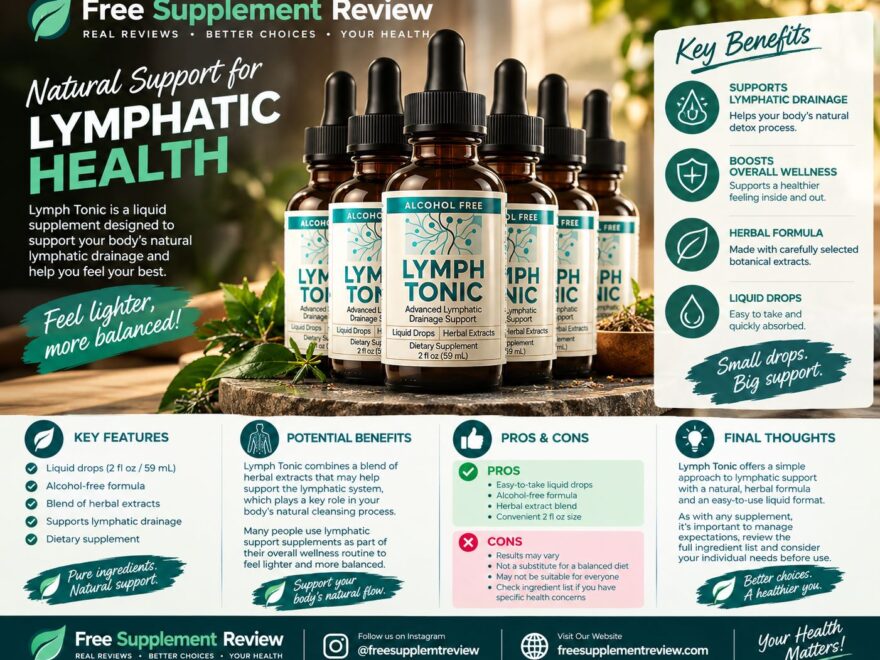
A row of amber dropper bottles, a leafy network drawn like lymph nodes, and the words “advanced lymphatic drainage support” make Lymph Tonic look like a natural way to clear out toxins and reduce puffiness. This Lymph Tonic review looks at what the product says, what the lymphatic system actually needs, and which details deserve attention, including a medication warning that many glowing reviews skip.
“Lymphatic drainage” has become a wellness buzzword, and marketing often turns it into a promise to detox the whole body. The reality is less dramatic and more interesting. Your lymphatic system is real, important, and mostly moved by your own muscles and breathing. A supplement can support general wellness at best, so a clear-eyed look at the claims will save you money and avoid risky shortcuts.
What Lymph Tonic Claims to Be
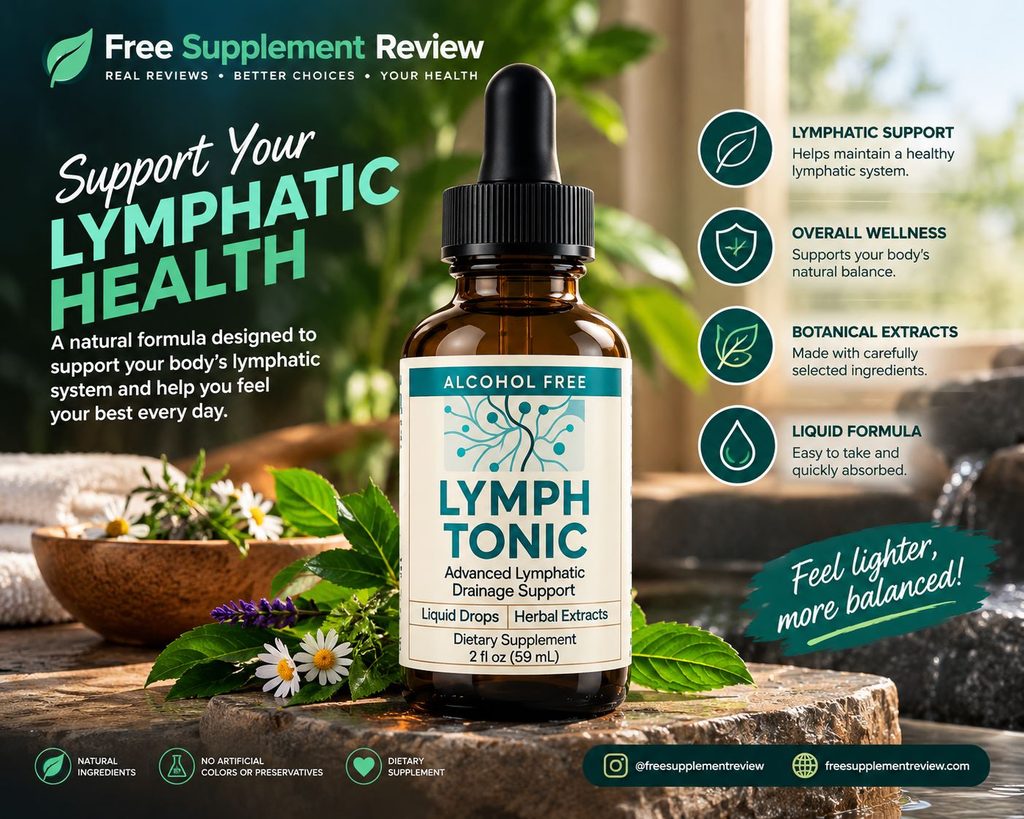
The label shows an alcohol-free liquid of herbal extracts, sold as a dietary supplement in 2 fl oz (59 mL) dropper bottles. Official marketing describes a 13-ingredient formula meant to support lymphatic drainage, circulation, and fluid balance, with purified water, vegetable glycerin, and natural flavoring as the inactive ingredients. Pages mention a few drops daily, under the tongue or in water, and a 60-day guarantee. The bundle image shows seven bottles, which is a sales presentation, not a recommended amount.
- Format: an alcohol-free herbal liquid in a dropper bottle
- Main claims: support for lymphatic flow, circulation, and fluid balance
- Ingredients named across pages: curcumin, boswellia, and ginger root, with others not consistently listed
- Missing from the image: a legible Supplement Facts panel with milligram amounts
What Your Lymphatic System Really Needs
Lymph fluid moves mainly through muscle contractions, deep breathing, and the movement of your joints, not through a “sluggish” system that drops can restart. Your liver and kidneys handle detoxification, which is why claims that a tonic “removes toxins and waste” are marketing language. Real lymphatic problems, such as lymphedema after surgery or cancer treatment, are medical conditions managed with compression, exercise, and specialized therapy.
If you simply want to feel less puffy or stiff, habits with better evidence can help. Walking, stretching, strength training, staying hydrated, and avoiding long periods of sitting all encourage fluid movement. Gentle self-massage can feel good, and a certified therapist can provide manual lymphatic drainage when it is medically appropriate. No supplement has been shown to speed up lymph flow in healthy people, so keep expectations modest.
The Lymph Tonic Ingredients and a Blood-Thinner Warning
The ingredients most often named have anti-inflammatory research, but that is a different thing from clearing lymph. Curcumin from turmeric has studies on joint discomfort and inflammation, though absorption is poor. Boswellia has some evidence for joint comfort. Ginger may ease nausea and mild inflammation. Newswire write-ups admit the finished Lymph Tonic has not been independently studied in clinical trials, which is the honest summary.
- Curcumin: may add to the effect of blood thinners and can aggravate gallbladder problems
- Boswellia: generally well tolerated, but it can cause stomach upset and may interact with some medications
- Ginger: mild blood-thinning properties and possible stomach irritation at high doses
- Unlisted extras: without the full label, you cannot check for interactions with your prescriptions
The interaction point matters most. If you take warfarin, aspirin, clopidogrel, or other blood thinners, or have surgery planned, ask a doctor or pharmacist before using an herbal blend that combines turmeric, boswellia, and ginger. Pregnancy, breastfeeding, gallbladder disease, and bleeding disorders are also reasons to check first. Natural herbs can interact with drugs, and a liquid format does not make that risk smaller.
Where the Lymph Tonic Reviews Come From
The publishing pattern is mixed. Several newswire articles, which are paid distribution, include a “title reference notice” saying promotional phrases come from the brand’s own website, and one states that no product samples were received. That disclosure is more candid than usual, but it also shows these pieces are not independent testing. The same text is republished across newswire services and then copied onto free sites, sometimes under spammy titles with random symbols and a repeated “see the current offer” link after every paragraph.
One nonprofit’s page even carries a headline promising a “critical investigation and shocking truth exposed,” while the body is generic and describes a lymph tonic in general terms rather than this specific bottle. Others are more balanced, calling Lymph Tonic legitimate but “not magic.” The practical rule is simple: trust pages that tell you what they could not verify, and ignore pages that promise shocking revelations without naming a single study.
When Swelling Needs a Doctor, Not Drops
Puffiness after a salty meal is common, but some swelling should never be handled with a supplement. Seek medical advice for swelling in one arm or leg, a hard, painful, or red swollen area, fever, or lymph nodes that stay enlarged for several weeks. Night sweats and unexplained weight loss also deserve attention. If you have had cancer treatment, ask your care team about a certified lymphedema therapist, not an online tonic.
A Sensible Way to Test Lymph Tonic
If you still want to try it, keep the experiment small and measurable. A single bottle is plenty, and a short log will tell you more than any testimonial. Remember that results from drops are hard to separate from the effects of simply drinking more water or moving more, so change only one thing at a time.
- Ask for the full Supplement Facts panel and the manufacturer’s physical address before ordering
- Show the label to a pharmacist if you take blood thinners or other prescription drugs
- Screenshot the checkout page, guarantee terms, and any subscription enrollment
- Track swelling, comfort, and energy for four to six weeks with photos and a simple rating
- Stop and seek care for rash, stomach pain, unusual bruising, or worsening swelling
This article is for informational purposes only and is not medical advice. Consult a healthcare provider before starting any herbal supplement, especially if you take blood-thinning medication, are pregnant or breastfeeding, or have unexplained swelling or enlarged lymph nodes.
Frequently Asked Questions About Lymph Tonic
Can Lymph Tonic detox my lymphatic system? There is no evidence that a supplement detoxifies the lymphatic system, and your liver and kidneys already handle detoxification.
What is in Lymph Tonic? Pages mention a 13-ingredient herbal formula with curcumin, boswellia, and ginger, so confirm the amounts on the official label.
Is Lymph Tonic safe with blood thinners? Not necessarily. Turmeric, boswellia, and ginger can affect bleeding, so ask a doctor or pharmacist first.
Is Lymph Tonic clinically proven? Reviews themselves admit the finished product has not been independently studied in clinical trials.
Have you tried Lymph Tonic or another “lymphatic drainage” supplement, and did you notice any change in swelling, energy, or comfort after a few weeks? Share your experience in the comments, and tell me if you would like a future post on simple daily habits that support healthy fluid movement