

Berberine Review: What the Research Supports, and What the Labels Don’t Tell You
Few supplements have gone from obscure herbal remedy to social media sensation as fast as berberine. Nicknames like “nature’s Ozempic” promise effortless blood sugar control and weight loss, while bottles with gold “#1 Best Seller” badges crowd every online store. This berberine review separates what clinical research actually shows from what marketing implies, so you can decide whether it deserves a place in your routine and how to buy it wisely.
Unlike many trendy ingredients, berberine has genuine science behind it: dozens of clinical trials and several meta-analyses. That makes it more interesting than the average supplement, and also more serious. A compound that can lower blood sugar and change how your liver processes drugs is not a casual wellness extra. Understanding both sides is the difference between a smart experiment and an avoidable mistake.
What Berberine Is and Why It Gets So Much Attention
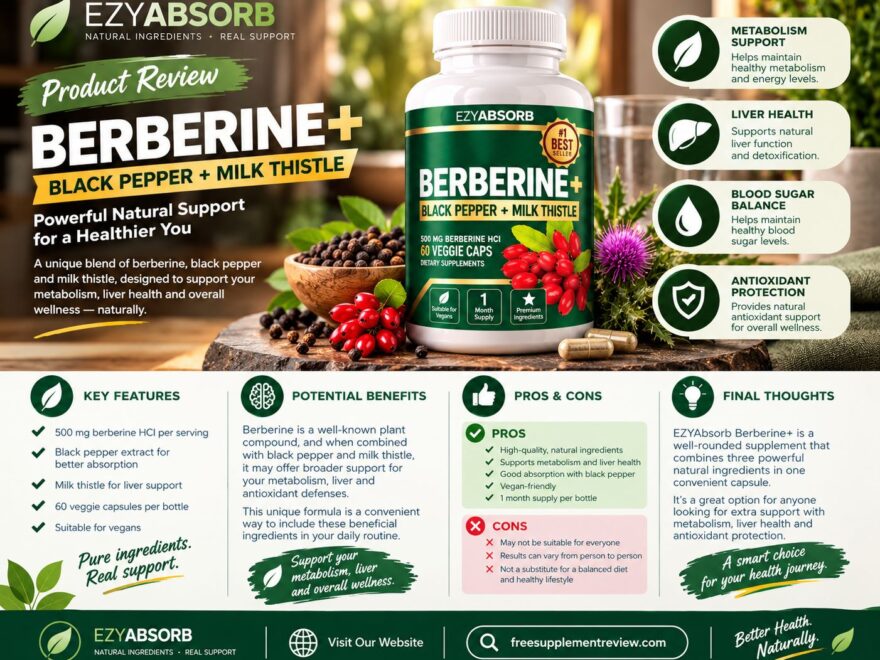
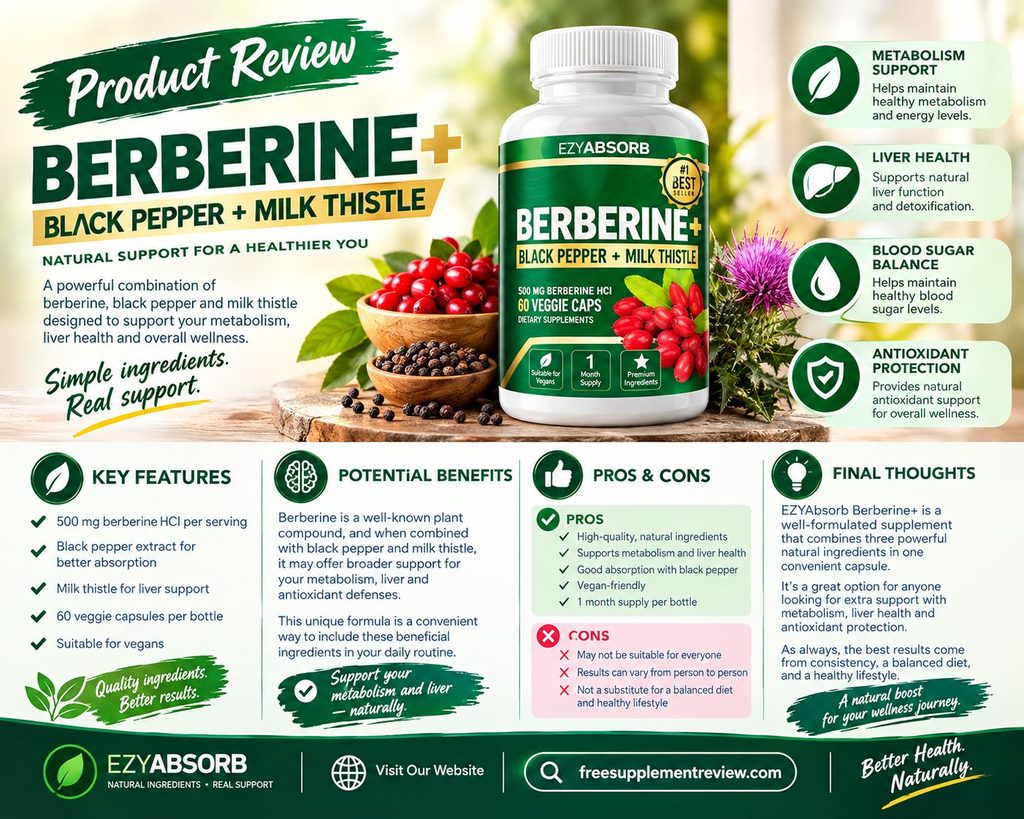
Berberine is a yellow plant alkaloid found in barberry, goldenseal, and Oregon grape, used for centuries in traditional medicine. Researchers believe it works partly by activating AMPK, an enzyme that helps regulate how cells use sugar and fat. Typical products, like the green bottle shown in many ads, contain 500 mg of berberine HCl per serving in 60 vegetarian capsules, often paired with black pepper extract for absorption and milk thistle for liver support.
- Berberine HCl: the most studied supplement form, usually sold at 500 mg per capsule or serving
- Black pepper extract (piperine): added to improve absorption, but it can also change how the body handles some medications
- Milk thistle: traditionally linked to liver health, with limited evidence for any added benefit alongside berberine
- Badges and claims: “#1 Best Seller” and “premium ingredients” are marketing phrases, not quality certifications
What the Research Says About Berberine
The strongest evidence concerns blood sugar. A 2023 meta-analysis of 20 randomized trials found berberine lowered A1C by roughly 0.4 percentage points compared with placebo, and an umbrella review of eleven meta-analyses reported meaningful effects on glucose, insulin resistance, and blood lipids. For cholesterol, a meta-analysis of 16 trials with over 2,000 patients found reductions in total cholesterol, LDL, and triglycerides. These are real, reproducible effects, but they are modest, not miraculous.
Context matters, too. Many trials were small, short, or run in specific populations, and reviewers note that the quality of the research needs improvement. Berberine appears comparable to some diabetes medications in certain studies, yet that does not make it a replacement for them. Weight-loss effects reported in trials are small, and no supplement removes the need for food quality, sleep, and movement. The honest summary is “promising, not proven for everything.”
Berberine Side Effects and Drug Interactions
The most common side effects are digestive: constipation, diarrhea, gas, nausea, and stomach pain. Taking berberine with meals and starting with a smaller amount often helps. The more important issue is interactions. Because it lowers blood sugar, berberine can push glucose too low when combined with metformin, insulin, or other diabetes drugs. It may also reduce activity of liver enzymes that process many medications, so a pharmacist should review your full list.
- People taking diabetes medication should not add berberine without medical supervision
- Drugs processed by liver enzymes, such as some statins, blood thinners, and immunosuppressants, deserve a pharmacist check
- Pregnancy and breastfeeding are reasons to avoid berberine, and it should not be given to infants
- Black pepper extract can amplify absorption of other substances, which may strengthen interactions
- Stop and seek care for severe diarrhea, yellowing skin, dizziness, or shakiness
How to Read a Berberine Label Like a Pro
Because berberine is popular, the market is crowded with look-alike bottles. A few minutes of label reading can save money and reduce risk. Check whether the 500 mg figure refers to one capsule or a full serving, because a “one month supply” of 60 capsules implies two capsules a day. Confirm the form, ideally berberine HCl, and look for independent testing from groups like USP, NSF, or ConsumerLab rather than self-awarded badges.
Be wary of proprietary blends that hide the amount of each ingredient, and of pages that promise to cure diabetes or melt fat. Supplements cannot legally claim to treat disease, and a product that does is telling you how it was marketed. Also compare price per 500 mg dose, not price per bottle, since capsule counts and strengths vary widely. A higher price is not proof of higher quality, and neither is a prominent best-seller sticker.
A Practical Way to Try Berberine
If you and your doctor decide it makes sense, treat it as a measured experiment instead of a lifestyle. Trials often used around 1,000 to 1,500 mg a day, divided across meals, but your dose should be set by a clinician who knows your health history. More is not better, and higher doses mostly increase stomach side effects without extra benefit.
- Get baseline blood work first: fasting glucose, A1C, cholesterol panel, and liver enzymes
- Start with one capsule with a meal and increase gradually only if your clinician agrees
- Track glucose, energy, digestion, and any dizziness in a simple log
- Repeat labs after eight to twelve weeks and review the results together
- Pair it with fiber, protein, walking after meals, and good sleep, which have stronger evidence overall
This article is for informational purposes only and is not medical advice. Consult a healthcare provider before starting berberine, especially if you have diabetes, take prescription medication, are pregnant or breastfeeding, or have liver or kidney disease.
Frequently Asked Questions About Berberine
Does berberine really lower blood sugar? Meta-analyses show modest reductions in glucose and A1C compared with placebo, but it is not a substitute for prescribed diabetes treatment.
Is berberine safe to take with metformin? It may add to the glucose-lowering effect and cause low blood sugar, so only combine them under medical supervision.
How long does berberine take to work? Studies typically measure results after eight to twelve weeks, so judge it with lab tests and logs rather than how you feel in the first week.
Is the “nature’s Ozempic” label accurate? No. It is a marketing nickname. Berberine works differently, and its weight-loss effect in trials is small.
Have you tried berberine, and did your blood sugar, cholesterol, or digestion change over a couple of months? Share your experience in the comments, and tell me if you would like a future post comparing berberine with other blood sugar supplements such as cinnamon and chromium.