

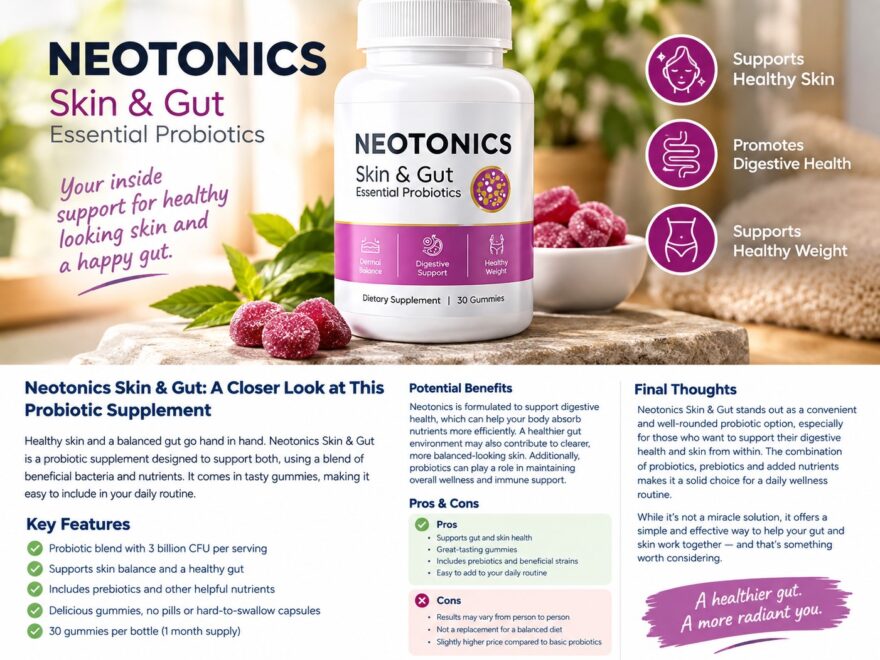
Neotonics Review: How to Spot a Fake Clinical Study Behind the Marketing
Skin-and-gut probiotic gummies are one of the fastest-growing supplement trends, and Neotonics is one of the names that shows up most often in that search. Rather than repeating the “beauty from within” pitch found across dozens of near-identical pages, this Neotonics review focuses on a specific, sophisticated marketing tactic worth learning to recognize — because it’s a skill that will help you evaluate far more than just this one product.
The gut-skin connection itself is a legitimate, actively researched area of science. That’s exactly what makes this category attractive to aggressive marketing networks: real biology gets used as a backdrop for claims about a specific finished product that haven’t actually been tested the way the marketing implies.
Why One Neotonics Review Reads Like a Real Clinical Study
The most sophisticated example found while researching this Neotonics review appears on the website of a nonprofit organization focused on drug abuse prevention, a group with no connection to skin or gut supplements. The article itself is written in the style of a genuine clinical study summary, referencing “participants,” specific week-by-week timelines, and terms like “tolerability” and “heterogeneous results” — language that mimics a real research paper closely enough to feel credible at a glance.
Here’s the detail that gives it away: there’s no link to an actual registered clinical trial, no named research institution, no journal citation, and no author credited with conducting the study. A genuine clinical trial summary always points back to a specific, checkable source, typically a registry like ClinicalTrials.gov or a peer-reviewed journal. Academic-sounding language without a traceable source isn’t evidence — it’s a well-executed imitation of evidence, and it’s worth learning to recognize in any supplement review that suddenly shifts into clinical-study phrasing.
- Look for a specific, clickable link to a clinical trial registry or peer-reviewed journal whenever a review mentions “participants” or “a study found”
- Be skeptical of research-style language (tolerability, heterogeneous, baseline) appearing on a site with no connection to the health or supplement industry
- Check whether the “study” names a research institution or lead author you can independently search for
The Domain Name and Statistic Worth Double-Checking
Another detail worth flagging in this Neotonics review: the site presenting itself as the official Neotonics page uses the domain “neottonic.com,” with a doubled letter that makes it look like the real brand name at a glance while actually being a slightly different address. This kind of near-identical domain naming is a common tactic across affiliate marketing networks, sometimes used to redirect traffic without the actual manufacturer’s direct involvement.
Several pages also repeat the claim that “nearly 70% of skin health is tied to gut function,” a specific statistic that shows up across multiple sites without ever linking to the actual research behind it. Gut health genuinely does influence skin through mechanisms researchers are still mapping out, but a precise percentage like this, repeated without a source, should be treated as a marketing soundbite rather than an established scientific figure.
What’s Actually in Neotonics and What’s Worth Questioning
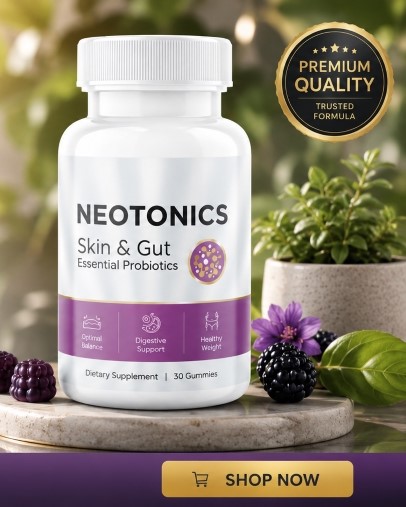
Setting the marketing tactics aside, the ingredient list itself is fairly standard for this supplement category: a probiotic blend marketed at roughly 500 million CFU, combined with ingredients like Bacillus Coagulans, Lion’s Mane, fenugreek, and Ceylon ginger. Individually, several of these have general research behind gut or antioxidant support, though the specific bacterial strains and exact co-ingredient doses aren’t consistently disclosed across the marketing materials reviewed.
Gummy-based probiotics also face a practical limitation worth knowing: the confectionery format typically can’t hold as high a bacterial count as a capsule, and it usually adds sugar to the serving. That’s not necessarily a dealbreaker if consistency matters more to you than potency, but it’s a real trade-off the marketing rarely mentions directly.
How to Approach Neotonics and Similar Gut-Skin Supplements
If you’re still curious about trying it, treat any gut-skin supplement as a gradual, supporting tool rather than a fix for significant skin concerns, and give it at least six to eight weeks of consistent use before judging results, since gut microbiome changes take time to potentially influence skin.
- Verify any cited study independently before trusting a clinical-sounding claim
- Double-check the spelling of the “official” website domain before entering payment information
- Check the sugar content per gummy if you’re managing blood sugar or watching added sugar intake
- See a dermatologist for persistent acne, significant skin changes, or anything a supplement alone hasn’t resolved after a reasonable trial period
This article is for informational purposes only and is not medical advice. Consult a dermatologist or healthcare provider for persistent skin or digestive concerns rather than relying solely on a supplement.
Frequently Asked Questions About Neotonics
Is the Neotonics clinical study real? A study-style summary found on an unrelated nonprofit’s website doesn’t link to any verifiable clinical trial registry or publication, so it should be treated as marketing content rather than confirmed research.
Is neottonic.com the real official Neotonics site? The doubled letter in that domain is worth noticing — always double-check spelling carefully before purchasing from a site claiming to be official.
Does Neotonics really improve skin through gut health? The gut-skin connection is a real, active area of research, but specific statistics about Neotonics itself aren’t consistently linked to verifiable sources.
How long should I try Neotonics before judging results? Most gut-related supplements need at least six to eight weeks of consistent use before any effect on skin would reasonably be expected to show up.
Have you come across a supplement review dressed up like a real clinical study, or noticed a domain name that looked almost, but not quite, right? Share what you found in the comments — and let me know if you’d like a future post on how to verify a supplement’s clinical claims before buying.