

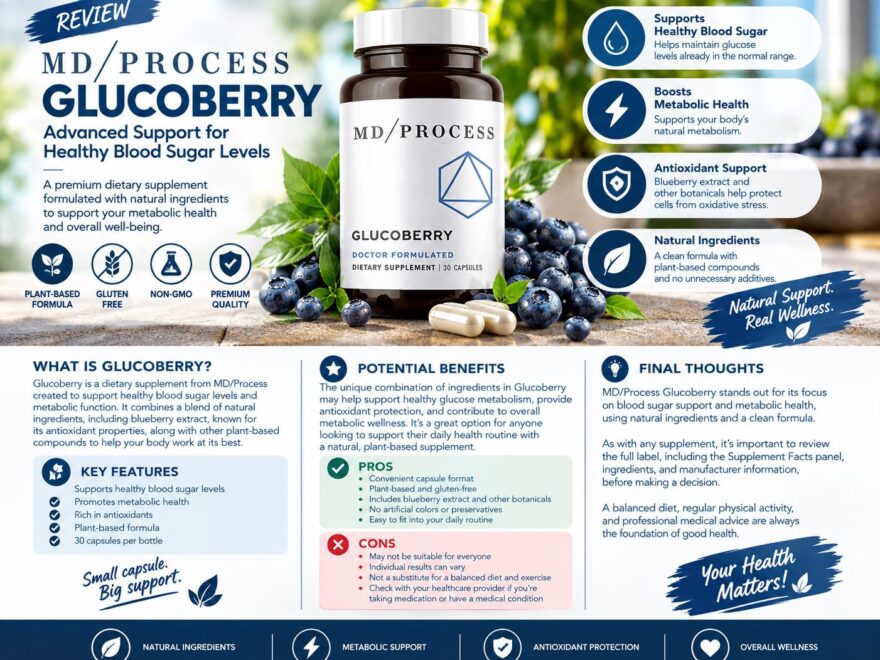
GlucoBerry Review: The Marketing Mechanism That Doesn’t Hold Up
Among blood sugar supplements, GlucoBerry stands out for one specific reason: instead of the usual pancreas-and-insulin framing, it’s marketed around the idea of “unclogging” a kidney-based process it calls the Blood Sugar Drain. This GlucoBerry review looks closely at that central claim, where the marketing behind it is actually being published, and what the ingredient list can realistically support once the branded terminology is set aside.
Made under the brand name MD/Process and built around Maqui Berry extract, GlucoBerry has been promoted across an unusually wide range of websites, several of which have no business publishing supplement content at all. That publishing pattern is worth examining before getting into the ingredients themselves, because it tells you a lot about how this specific product has been marketed.
Why GlucoBerry Content Keeps Turning Up on Institutional Websites
Researching this GlucoBerry review turned up promotional PDFs hosted across several unrelated institutions: a California state recycling agency, a Jewish family services nonprofit, a university public art program, and most notably, the website of an actual hospital. None of these organizations have any connection to blood sugar supplements, and it’s extremely unlikely any of them reviewed or authorized this content. This pattern — publishing affiliate marketing through open upload forms on institutional sites — has shown up repeatedly across supplements researched in this space, but seeing it extend to a hospital’s own website is a notable escalation worth flagging specifically.
When a product’s marketing shows up somewhere with no logical reason to host it, treat that placement as more informative than the content itself. A genuine, authorized partnership with a health organization looks completely different from a PDF quietly uploaded through an open contact form.
The “Blood Sugar Drain” Claim Doesn’t Hold Up to Scrutiny
GlucoBerry’s central marketing concept describes a “Blood Sugar Drain” — a supposed kidney mechanism that, when “clogged” by something called sticky SG2 proteins, prevents excess sugar from properly leaving the body. Some versions of this marketing attribute the concept to research from Harvard and Johns Hopkins, without linking to any specific published study, named researcher, or journal article. “Blood Sugar Drain” and “SG2 proteins” aren’t established, standard terms in nephrology or endocrinology — they function as branded, simplified marketing language dressed up to sound like a scientific discovery.
- Search any named institution (Harvard, Johns Hopkins, etc.) alongside the specific claim to see if a real, citable study actually exists
- Be skeptical of brand-specific terminology (“Blood Sugar Drain,” “SG2 proteins”) that doesn’t appear in standard medical or scientific literature outside that one product’s marketing
- Check whether a “doctor-formulated” claim names a real, licensed physician with a verifiable, independent professional background
One more balanced, independently written source worth noting pointed out something the rest of the marketing conveniently leaves out: there are currently no independent, peer-reviewed clinical trials on the complete GlucoBerry formula itself proving it lowers blood sugar or A1C. That’s an important gap between “ingredients with general research behind them” and “a finished, clinically tested product,” and it’s the single most useful thing to know before trusting any GlucoBerry review that promises dramatic results.
What’s Actually in GlucoBerry and What It Might Realistically Do
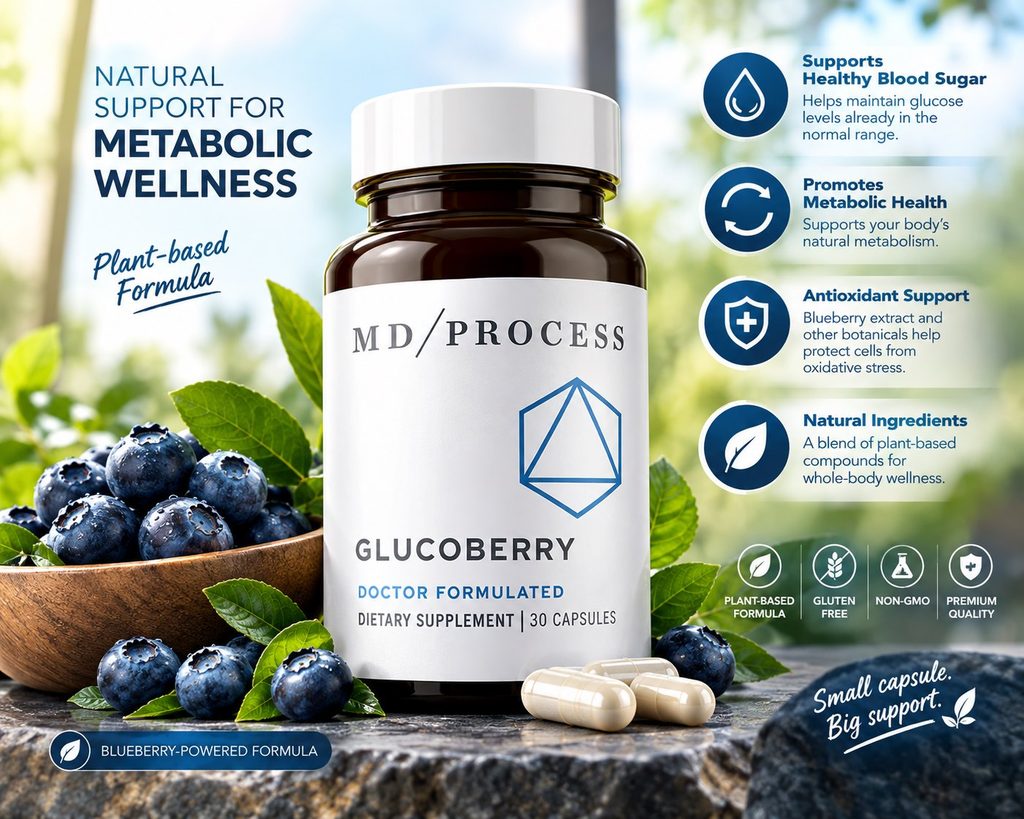
Setting the branded mechanism language aside, GlucoBerry’s main active ingredient is Maqui Berry extract, rich in a compound called delphinidin, alongside chromium and biotin in most versions of the formula. Maqui berry’s antioxidant content is real and has some research behind general metabolic and anti-inflammatory support, though evidence specifically tying it to clinically meaningful blood sugar reduction in humans is still limited. Chromium is one of the more established minerals in this category, though its effective research dose is often higher than what proprietary blends typically disclose.
User feedback on more balanced sources is genuinely mixed — some report noticeable improvements in energy and blood sugar stability, while others report no measurable change after weeks of use, along with occasional mild digestive discomfort when starting. That split result is consistent with a modest-acting antioxidant and mineral blend rather than the dramatic “unclogging” mechanism described in the marketing.
How to Approach GlucoBerry More Carefully
If you’re still considering it, treat GlucoBerry as an unproven, modestly dosed antioxidant supplement rather than a mechanism-specific solution, and set your expectations accordingly. Buy only from the official site, track your own blood sugar readings if you already monitor them, and give it a realistic eight to twelve week trial before judging results rather than relying on marketing timelines.
- Don’t let branded terminology like “Blood Sugar Drain” substitute for checking whether a real clinical trial exists
- Compare chromium and Maqui berry doses against the amounts used in independent research, where available
- Track your own glucose readings and energy levels for at least two months before deciding if it’s working for you
- Loop your doctor in if you’re managing diabetes, since any supplement in this category can interact with glucose-lowering medication
This article is for informational purposes only and is not medical advice. Consult a healthcare provider before starting GlucoBerry or any blood sugar supplement, and never replace prescribed diabetes treatment with an unverified product.
Frequently Asked Questions About GlucoBerry
Is the GlucoBerry “Blood Sugar Drain” a real medical concept? No. This is branded marketing terminology, not an established term in nephrology or endocrinology, and the cited Harvard and Johns Hopkins research isn’t linked to any specific, checkable study.
Has GlucoBerry been clinically tested? Independent sources note there are no published, peer-reviewed clinical trials on the complete GlucoBerry formula itself, only general research on individual ingredients like Maqui berry and chromium.
Why does GlucoBerry marketing appear on a hospital’s website? Some promotional content was found hosted through an apparently exploited upload system on an unrelated hospital site, a sign of aggressive affiliate marketing rather than an authorized medical partnership.
How long before GlucoBerry shows results? If you decide to try it, give it a realistic eight to twelve weeks while tracking your own readings, since user reports are genuinely mixed on whether it produces a noticeable effect.
Have you come across a GlucoBerry review published somewhere unexpected, or noticed a branded marketing term being used as if it were established medical science? Share what you found in the comments — and let me know if you’d like a future post comparing Maqui berry’s real research against the marketing claims built around it.