

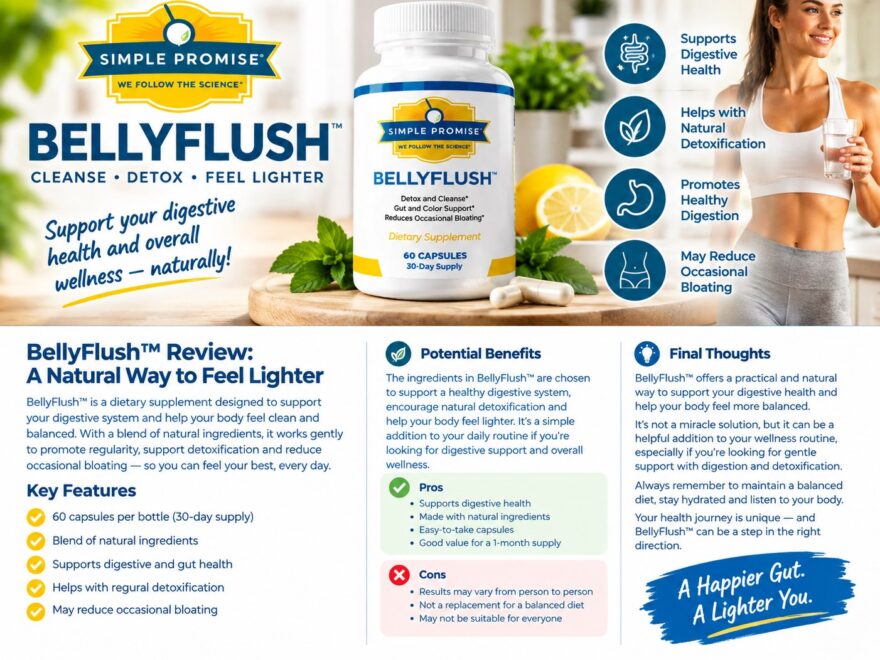
BellyFlush Review: What’s Actually Behind the “Detox” Claims
Colon cleanse supplements promise a lot — lighter, debloated, “detoxified” — and BellyFlush by Simple Promise is one of the more visible names in that category right now. This BellyFlush review sets aside the marketing language around cleansing and detox and instead looks at what’s actually in the capsule, because the ingredient list here tells a much more specific story than the branding does.
Unlike some of the vaguer “detox” products on the market, BellyFlush is fairly transparent about its formula: an eleven-ingredient botanical blend built around cascara sagrada bark, senna leaf extract, cape aloe leaf, triphala fruit, bentonite clay, and several supporting herbs like marshmallow root, slippery elm, and milk thistle. That transparency is genuinely useful, because it means you can evaluate the real mechanism rather than just the marketing copy.
What’s Really Happening When You Take BellyFlush
Here’s the detail most BellyFlush marketing glosses over: cascara sagrada and senna leaf aren’t gentle wellness herbs in the way “natural detox” language implies — they’re stimulant laxatives. Cascara sagrada works by slowing water and electrolyte reabsorption in the intestines, which increases stool volume and triggers contractions. Senna works through a related stimulant mechanism. Both have a long history of use for constipation, and both are the reason a product like BellyFlush makes you go to the bathroom more, not because it’s “flushing toxins” in any medically meaningful sense.
That distinction matters. The sensation of feeling “lighter” after taking a stimulant-laxative blend is real, but it mostly reflects your digestive tract being emptied, not a removal of toxins the body wasn’t already handling on its own through the liver and kidneys. The term “detox” in this context is a marketing frame layered onto a fairly conventional laxative effect, not a distinct physiological process.
Why the Stimulant Laxative Ingredients Deserve Real Caution
This is the most important practical information missing from most BellyFlush reviews: stimulant laxatives like senna and cascara sagrada aren’t meant for regular, long-term daily use. Relying on them consistently can lead to the bowel becoming less responsive on its own over time, sometimes called laxative dependence, along with a risk of electrolyte imbalance if used too frequently or at high doses.
- Stimulant laxative ingredients like senna and cascara sagrada are generally intended for occasional, short-term use rather than daily, indefinite supplementation
- Overuse can disrupt your body’s natural electrolyte balance, particularly potassium, which affects muscle and heart function
- These ingredients aren’t recommended during pregnancy or for people with inflammatory bowel conditions, bowel obstruction, or appendicitis-like symptoms
- Cascara sagrada specifically carries a history of liver concern with prolonged heavy use, which is why most responsible sourcing limits it to short courses
None of this means BellyFlush is dangerous when used as directed for occasional constipation relief. It means the “gentle daily detox” framing undersells what’s actually a fairly standard stimulant laxative formula, and that distinction should shape how you use it.
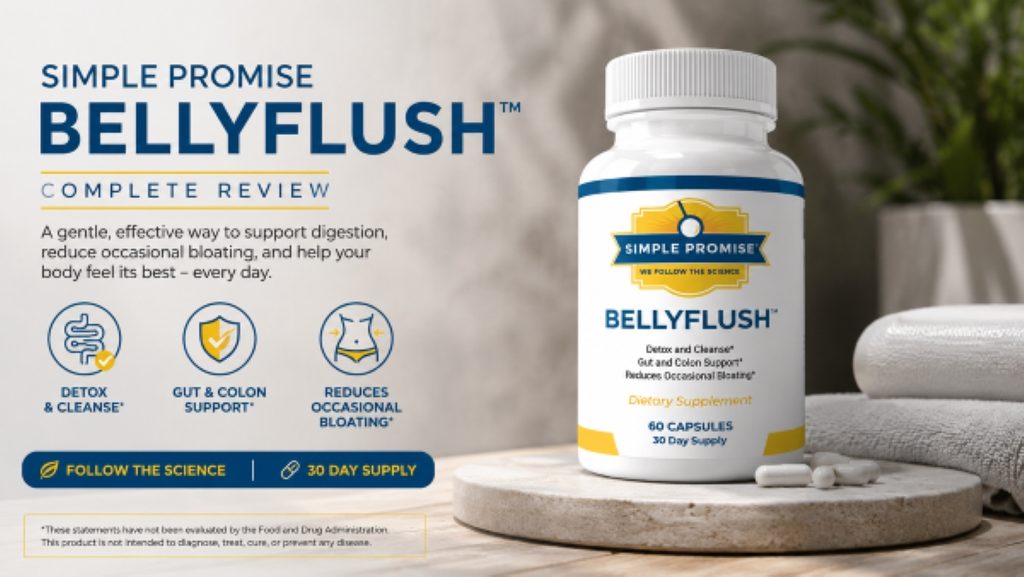
The Supporting Ingredients Worth Knowing About
Beyond the laxative core, BellyFlush includes ingredients with a gentler, more supportive role. Bentonite clay is included for its traditional use absorbing compounds in the gut, slippery elm and marshmallow root are mucilage-rich herbs traditionally used to soothe the digestive lining, and milk thistle is included primarily for its antioxidant association with liver health rather than any direct laxative effect. Triphala, a traditional Ayurvedic blend of three fruits, has more research behind general digestive regularity than most of the other ingredients here.
These supporting ingredients are reasonable additions and less of a concern than the stimulant laxative core, but it’s worth knowing they’re playing a secondary role in the formula rather than being the primary reason you’d notice an effect.
How to Use BellyFlush More Responsibly
If you decide to try it, the most sensible approach is treating BellyFlush as an occasional tool for genuine constipation relief rather than a daily long-term habit. Several independent reviews note the product is formulated as a “gentle cleanse” at a lower senna dose than some competitors, which is a reasonable harm-reduction choice, but it doesn’t eliminate the underlying caution that applies to any stimulant laxative.
- Use it occasionally rather than as a daily supplement, and take breaks between uses
- Stay well hydrated, since stimulant laxatives increase fluid loss through the bowel
- Avoid combining it with other laxative products or supplements that also affect bowel movements
- Talk to a doctor first if you’re pregnant, have an inflammatory bowel condition, or take medication that affects electrolyte levels, like certain diuretics or heart medications
If you’re dealing with chronic, ongoing digestive issues rather than occasional constipation, that’s worth bringing to a doctor directly, since persistent symptoms can have underlying causes that a laxative-based supplement like BellyFlush isn’t designed to address.
This article is for informational purposes only and is not medical advice. Consult a healthcare provider before using BellyFlush or any stimulant laxative supplement regularly, especially if you’re pregnant, have a digestive condition, or take medication affecting electrolyte balance.
Frequently Asked Questions About BellyFlush
Is BellyFlush actually a “detox” product? Not in a medical sense. Its main ingredients are stimulant laxatives that increase bowel movements, rather than a process that removes toxins the liver and kidneys aren’t already handling.
Is it safe to take BellyFlush every day? Regular, long-term use of stimulant laxative ingredients like senna and cascara sagrada isn’t generally recommended, since it can lead to reduced natural bowel function over time.
Can BellyFlush be used during pregnancy? No. Stimulant laxative ingredients like those in BellyFlush aren’t recommended during pregnancy, and the product itself is intended for adults only.
What’s the difference between BellyFlush and a fiber supplement? Fiber supplements work more gradually by adding bulk to stool, while BellyFlush’s core ingredients are stimulant laxatives that trigger more active bowel contractions.
Have you tried BellyFlush or a similar colon cleanse supplement, and did you use it occasionally or as a daily habit? Share your experience in the comments — and let me know if you’d like a future post comparing gentle fiber-based digestive supplements to stimulant laxative blends like this one.