

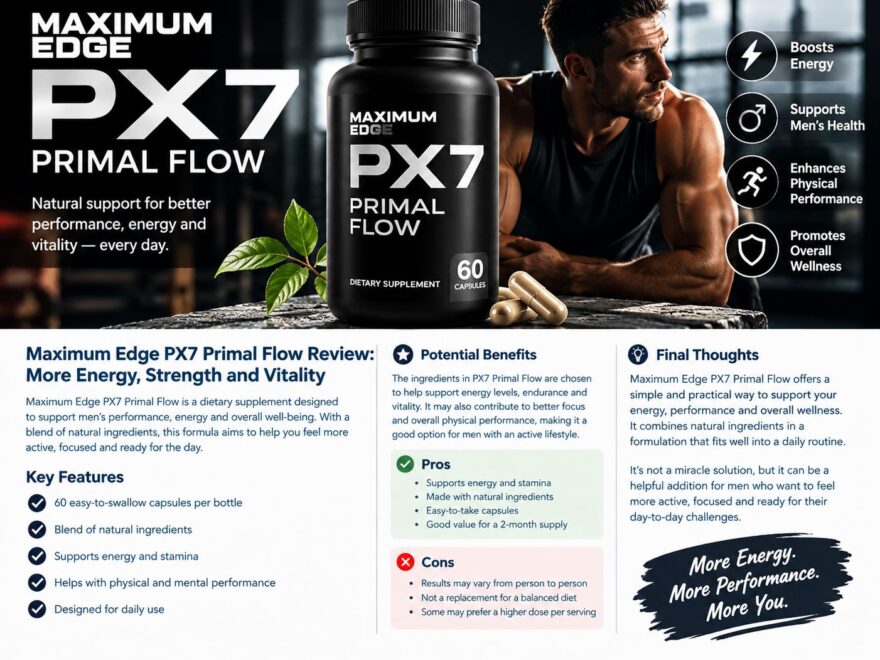
Primal Flow Review: What the Packaging Doesn’t Tell You
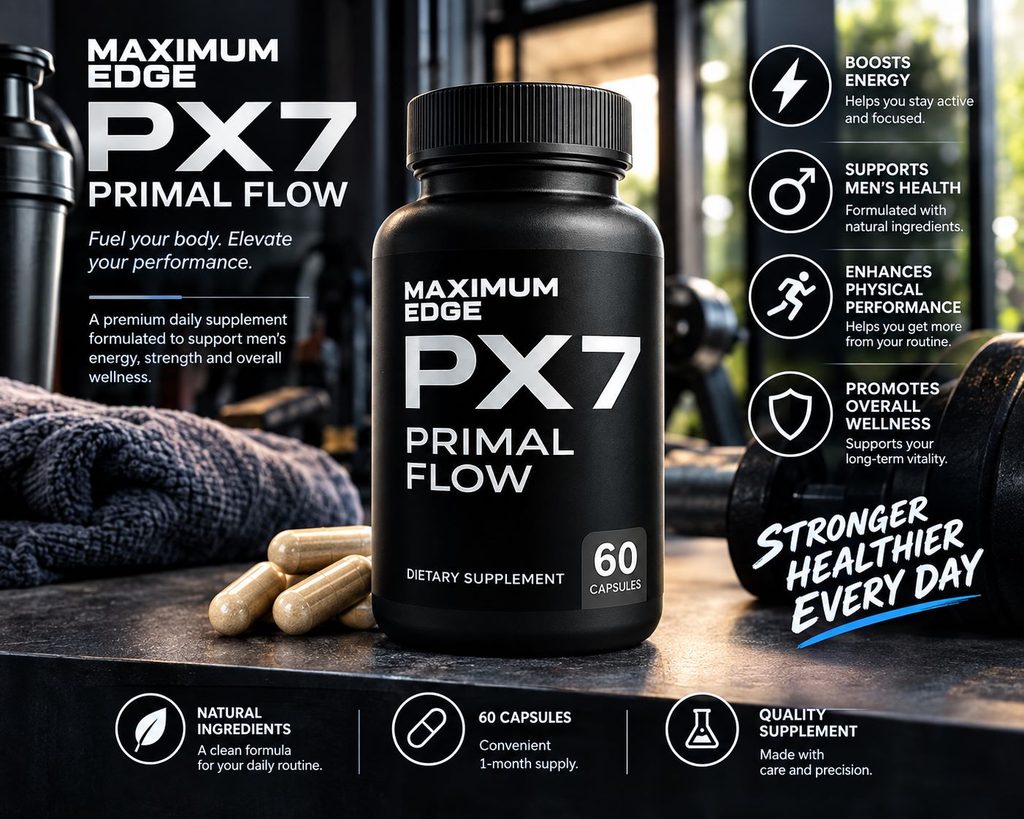
If you’ve seen a bottle labeled Primal Flow promising boosted energy, men’s health support, and better physical performance, it’s worth pausing before you buy — because that framing leaves out what this product is actually marketed as everywhere else online. This Primal Flow review looks at the gap between the general-wellness packaging and the far more specific claims used to sell it, plus a few other red flags worth knowing before you spend money on it.
Digging into where Primal Flow (sold under the full name PX7 Primal Flow, by Maximum Edge Nutrition) actually gets promoted reveals something the boxed version doesn’t mention at all: nearly every marketing page for this product focuses specifically on prostate health, BPH, and urinary symptoms, not general energy or fitness performance. That mismatch is the first thing worth understanding.
Why the Primal Flow Label Doesn’t Match Its Real Marketing
A bottle or ad framing Primal Flow as a general energy and wellness supplement is a notably different pitch than what shows up across dozens of dedicated review sites, which describe it almost exclusively as a prostate support formula aimed at men over 50 dealing with an enlarged prostate, frequent urination, and weak urine flow. Some pages go further, claiming it works by blocking the conversion of testosterone into DHT, a hormone connected to prostate growth — a specific physiological claim that deserves real evidence, not vague “supports men’s health” language.
When a product’s public-facing packaging downplays the condition it’s actually marketed to treat elsewhere, that’s worth noticing. It may reflect different versions of ad creative for different platforms, but it also means you can’t rely on the bottle alone to understand what the product claims to do — you have to check the manufacturer’s actual claims directly.
The Marketing Red Flags Worth Recognizing
Beyond the mismatched framing, Primal Flow’s promotional ecosystem shows several patterns seen repeatedly across other heavily marketed supplements. Multiple near-identical review sites are hosted on free platforms like Google Sites, one advertising a suspiciously large “90% off today” discount designed to create urgency. Customer testimonials are attributed only to first names and initials — “Jonathan P.,” “Mark S. from Westchester, New York” — with no way to verify these are real customers.
- Watch for claims that a supplement is made in an “FDA-approved facility” — the FDA doesn’t approve dietary supplement manufacturing facilities in the way this phrase implies, only registers them, which is a meaningfully different thing
- Be skeptical of absolute claims like “no side effects whatsoever,” since any active ingredient can affect different people differently
- Notice when review articles from years ago (some found here date to 2021) get republished with a current year in the title, a common tactic to make old, recycled content look freshly reviewed
- Check whether the same manufacturer sells other similarly templated products — Maximum Edge Nutrition also markets a separate product called “ED Elixir,” with claims that overlap suspiciously with Primal Flow’s own erectile function language
What’s Actually in the Formula and Why Dosing Matters
The ingredient list itself includes several compounds with real, if limited, research behind prostate health: saw palmetto, stinging nettle, and a mushroom blend of shiitake, maitake, and reishi. Saw palmetto in particular has been studied for BPH symptoms, though results across clinical trials have been mixed rather than consistently positive. The bigger issue is that Primal Flow is described as a proprietary blend of 15 herbs with no per-ingredient dosage disclosed on most marketing pages, making it impossible to know whether saw palmetto or any other individual ingredient is present in an amount that matches what research has actually tested.
This is the same dosing transparency problem that shows up across many supplements in this category. A promising ingredient at a trace amount isn’t the same product as that ingredient at a clinically studied dose, and proprietary blends make that distinction impossible to verify from the label alone.
Why Prostate Symptoms Deserve a Doctor’s Evaluation First
Prostate enlargement and urinary symptoms are genuinely common in men over 50, but they’re also symptoms that overlap with more serious conditions, including prostate cancer, that require proper testing to rule out. Relying on a supplement, Primal Flow or otherwise, to address urinary changes without a doctor’s evaluation first risks delaying a diagnosis that a simple PSA test or physical exam could catch early.
If you’re noticing frequent urination, weak flow, or other urinary changes, the responsible first step is a urologist or primary care visit, not an online supplement order. A supplement can reasonably sit alongside medical care for some men, but it should never replace the initial evaluation that identifies what’s actually causing the symptoms.
This article is for informational purposes only and is not medical advice. Talk to a doctor about any prostate or urinary symptoms before relying on a supplement, and never delay a PSA test or medical evaluation in favor of an unverified product.
Frequently Asked Questions About Primal Flow
Is Primal Flow really an energy supplement? The general packaging frames it that way, but most marketing for this product actually focuses specifically on prostate health and urinary symptoms, which is a significant difference worth knowing before you buy.
Are the ingredient doses in Primal Flow disclosed? No. It’s marketed as a proprietary blend of 15 herbs without per-ingredient dosages listed on most pages, making it impossible to compare against clinical research doses.
Can Primal Flow replace a prostate exam? No. Urinary and prostate symptoms should be evaluated by a doctor first, since a supplement can’t rule out more serious underlying conditions.
Is Primal Flow made in an FDA-approved facility? The FDA registers, rather than approves, supplement manufacturing facilities, so this common marketing phrase is generally misleading.
Have you seen Primal Flow marketed differently across different ads or packaging, or noticed other supplements that downplay their real target condition? Share what you found in the comments — and let me know if you’d like a future post comparing saw palmetto dosing across popular prostate supplements.